



Begin of page section:
Page sections:

  • Go to contents (Accesskey 1)
  • Go to position marker (Accesskey 2)
  • Go to main navigation (Accesskey 3)
  • Go to sub navigation (Accesskey 4)
  • Go to additional information (Accesskey 5)
  • Go to page settings (user/language) (Accesskey 8)
  • Go to search (Accesskey 9)

End of this page section. Go to overview of page sections

Begin of page section:
Page settings:

English en
Deutsch de
Search
Login

End of this page section. Go to overview of page sections

Begin of page section:
Search:

Search for details about Uni Graz
Close

End of this page section. Go to overview of page sections


Search

Begin of page section:
Main navigation:

Page navigation:

  • University

    University
    • About the University
    • Organisation
    • Faculties
    • Library
    • Working at University of Graz
    • Campus
    Developing solutions for the world of tomorrow - that is our mission. Our students and our researchers take on the great challenges of society and carry the knowledge out.
  • Research Profile

    Research Profile
    • Our Expertise
    • Research Questions
    • Research Portal
    • Promoting Research
    • Research Transfer
    • Ethics in Research
    • Commission for Scientific Integrity
    Scientific excellence and the courage to break new ground. Research at the University of Graz creates the foundations for making the future worth living.
  • Studies

    Studies
    • Prospective Students
    • Students
    • Welcome Weeks for First Year Students
  • Community

    Community
    • International
    • Location
    • Research and Business
    • Alumni
    The University of Graz is a hub for international research and brings together scientists and business experts. Moreover, it fosters the exchange and cooperation in study and teaching.
Topics
  • Sustainable University
  • Researchers answer
  • Work for us
Close menu

End of this page section. Go to overview of page sections

Begin of page section:
You are here:

University of Graz News Klimawissenschaft im Pub

End of this page section. Go to overview of page sections

Friday, 15 January 2016

Klimawissenschaft im Pub

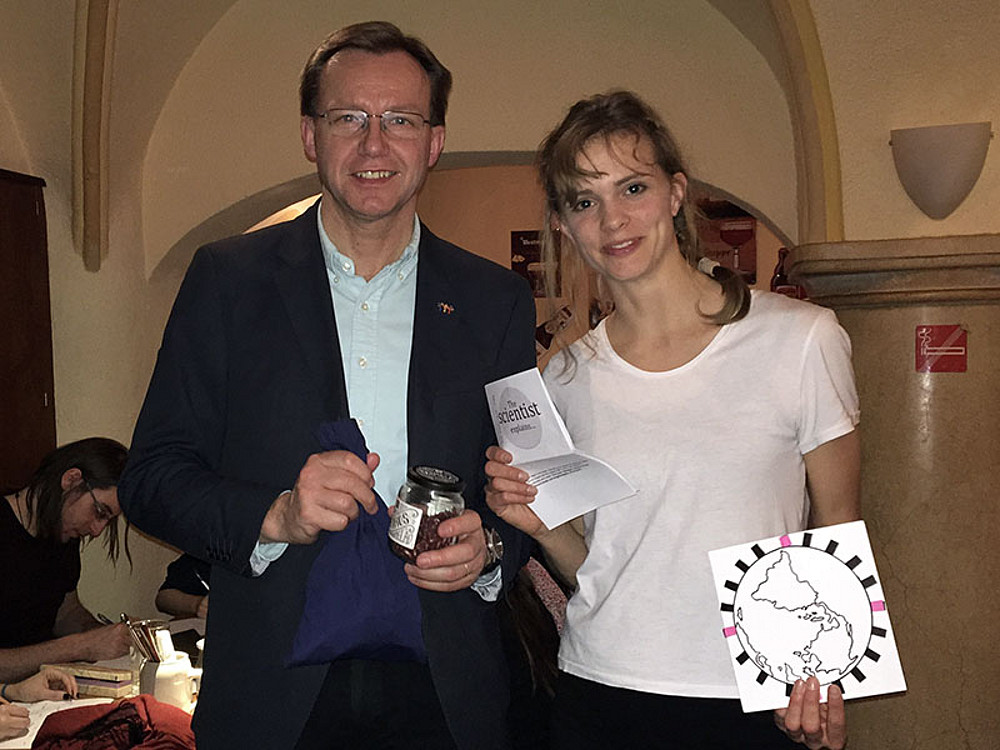
Gottfried Kirchengast und Sara Trulsson leiteten den ungewöhnlichen Kurs. Sie freuen sich über die gelungene Lehrveranstaltung. Fotos: Wegener Center

Gottfried Kirchengast und Sara Trulsson leiteten den ungewöhnlichen Kurs. Sie freuen sich über die gelungene Lehrveranstaltung. Fotos: Wegener Center

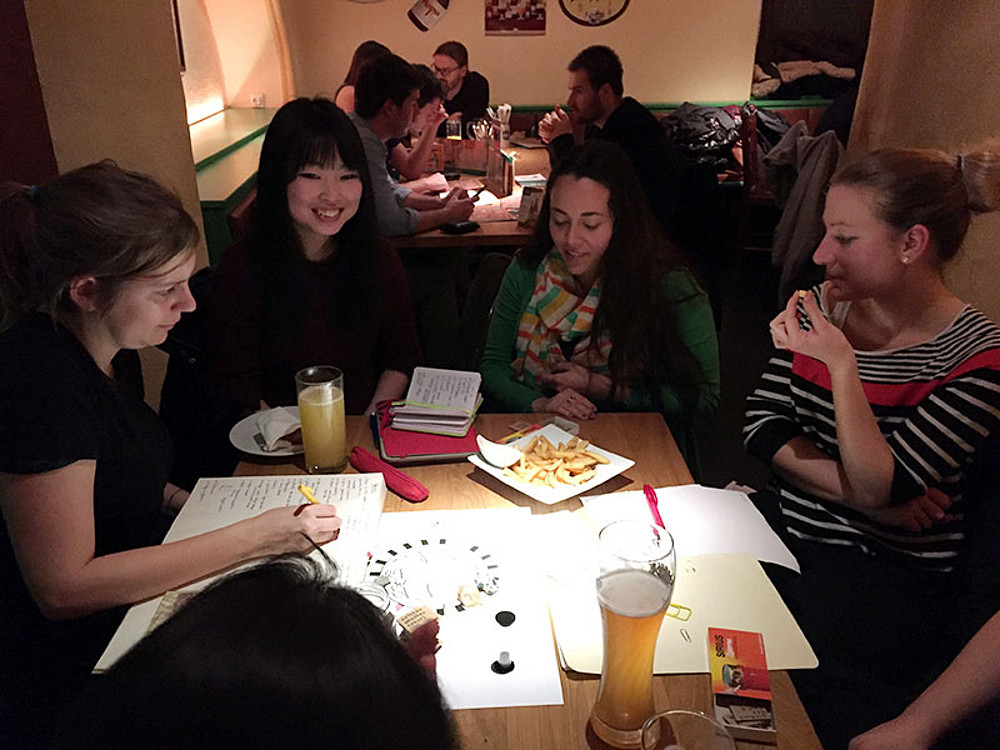
In Teams vertieften die Studierenden spielerisch ihr Wissen.

In Teams vertieften die Studierenden spielerisch ihr Wissen.

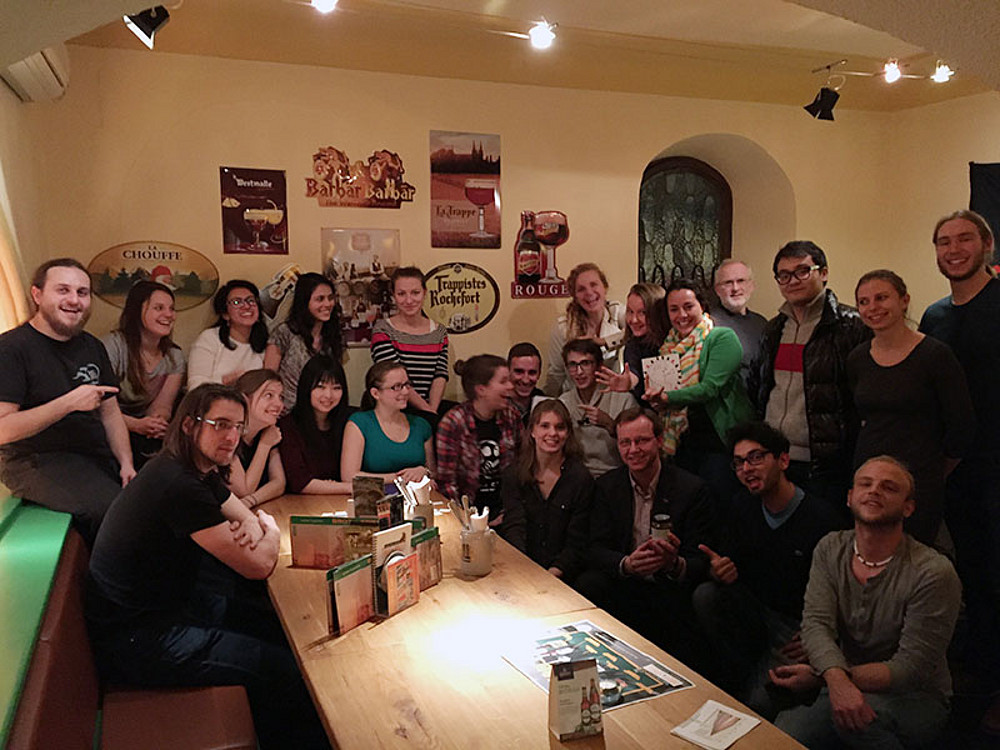
Die über 20 TeilnehmerInnen waren auch nach stundenlanger intensiver Lernarbeit noch in bester Stimmung.

Die über 20 TeilnehmerInnen waren auch nach stundenlanger intensiver Lernarbeit noch in bester Stimmung.

Studierende entwickelte neues Lehrveranstaltungskonzept zur spielerischen Vertiefung von Wissen über den Klimawandel

Spielerisches, gemeinsames Lernen stand im Mittelpunkt des Kurses „Earth’s Climate System and Climate Change“, den die schwedische ERASMUS-Studentin Sara Trulsson konzipiert und gemeinsam mit Univ.-Prof. Dr. Gottfried Kirchengast geleitet hat. Der ungewöhnliche Ort, an dem die innovative Lehrveranstaltung in dieser Woche geblockt stattfand: das Lokal „Brot & Spiele“ in der Grazer Mariahilferstraße.

An zwei Abenden – jeweils von 16 bis 21 Uhr – trafen sich über 20 Studierende, die auch die Vorlesung „Earth’s Climate System and Climate Change“ von Prof. Kirchengast besucht hatten. „Der Kurs im Brot & Spiele sollte die TeilnehmerInnen motivieren, gemeinsam ihr Wissen aus der Vorlesung zu vertiefen und sich gleichzeitig auf die bevorstehende Prüfung vorzubereiten“, erklärt Sara Trulsson, die im vergangenen Studienjahr an der Uni Graz studiert hatte und nun für den Kurs aus Stockholm – klimafreundlich mit dem Zug – wieder zurückgekehrt war. Das Lehrveranstaltungskonzept und die Erfahrung damit möchte sie als Teil ihrer Masterarbeit verwerten. Im Mittelpunkt stehen selbst entwickelte lernbezogene Brettspiele zur lustbetonten und teamorientierten Aneignung der Inhalte. „Ich war selber von der spannenden Vorlesung begeistert und will beitragen, dass nachfolgende Studierende noch mehr von ihrer Breite und Tiefe bei dem so wichtigen Thema Klimawandel profitieren können“, sagt Trulsson.

Die Idee ist voll aufgegangen. „Das Interesse aus der Vorlesung heraus war bereits im Vorfeld groß. Wir mussten die TeilnehmerInnenzahl aber auf 24 begrenzen“, berichtet Kirchengast. Während des Kurses, der ergänzend zur Vorlesung als Freifach angeboten wurde, waren die Studierenden dann mit viel Spaß und ganzem Einsatz dabei. „Bereits am ersten Abend haben sie in einer lustigen Mischung aus Wettbewerb, Kooperation und etwas Zufall bei den Spielen gemeinsam 36 Gigatonnen CO2 eingespart, am zweiten Abend dann sogar 55 Gigatonnen“, freut sich der Leiter des Wegener Center für Klima und Globalen Wandel über den Lernerfolg der TeilnehmerInnen und viele begeisterte Rückmeldungen. Die CO2-Einsparungen resultierten aus richtig gelösten interaktiven Frage-Antwort-Spielen in verschiedener Form. Auch die am Anfang und zum Schluss erstellten Mindmaps und Selbstbewertungen zeigten, dass die Studierenden ihr Wissen zum Thema im Laufe des Kurses erheblich erweitert und vertieft hatten.
„Ich freue mich wirklich, dass die URBI-Fakultät und ihr Studiendekan für diesen ‚Lehrversuch‘ inklusive Tutorinnenanstellung offen waren; es war die Investition absolut wert“, zeigt sich Kirchengast abschließend dankbar für die an der Uni Graz mögliche Lehrvielfalt.

created by Gudrun Pichler

Related news

Jurassic Sounds: Biologist reconstructs insect songs from 165 million years ago

It was apparently not just the roars of the dinosaurs that made up the soundscape of the animal world during the Jurassic period. Crickets and grasshoppers communicated through a variety of songs and high-pitched sounds, as Thorin Jonsson from the Institute of Biology at the University of Graz discovered together with colleagues from the universities of Lincoln, Bristol (UK), Beijing (China) and Tempe (USA). The findings on what are so far the oldest traces of sound on Earth have just been published in the journal PNAS.

EU funding boosts international exchange between universities

The University of Graz is further expanding its international study opportunities through the European university alliance Arqus and is taking the lead in two key projects. In future, students will benefit from even more joint degree programmes and from simplified recognition of academic achievements through the Joint European Degree Label.

Rescue and risks: Researchers have surveyed public perceptions of AI

The use of artificial intelligence has had to be made transparent since 2 August 2026. The EU’s AI Act, which has been in force since then, also sets out how risky an application is and which security measures apply as a result. However, the assessment of risks by the legislation differs in some cases significantly from the perceptions of the Austrian public. This is the finding of a representative study carried out by data scientist Stefan Thalmann from the University of Graz and his team.

The Healing Sea: Researchers discover new approaches to treating chronic inflammation in sponges

Chronic inflammation plays a key role in many diseases, ranging from metabolic disorders and cardiovascular diseases to tissue damage following injuries or infections. “Normally, the body is able to resolve inflammation on its own. If this process becomes unbalanced, immune cells remain permanently active and continue to drive negative changes in the tissue,” explains Andreas Koeberle, a pharmacist at the University of Graz.

Begin of page section:
Additional information:

University of Graz
Universitaetsplatz 3
8010 Graz
Austria
  • Contact
  • Web Editors
  • Moodle
  • UNIGRAZonline
  • Imprint
  • Data Protection Declaration
  • Accessibility Declaration
Weatherstation
Uni Graz

End of this page section. Go to overview of page sections

End of this page section. Go to overview of page sections

Begin of page section:

End of this page section. Go to overview of page sections