



Begin of page section:
Page sections:

  • Go to contents (Accesskey 1)
  • Go to position marker (Accesskey 2)
  • Go to main navigation (Accesskey 3)
  • Go to sub navigation (Accesskey 4)
  • Go to additional information (Accesskey 5)
  • Go to page settings (user/language) (Accesskey 8)
  • Go to search (Accesskey 9)

End of this page section. Go to overview of page sections

Begin of page section:
Page settings:

English en
Deutsch de
Search
Login

End of this page section. Go to overview of page sections

Begin of page section:
Search:

Search for details about Uni Graz
Close

End of this page section. Go to overview of page sections


Search

Begin of page section:
Main navigation:

Page navigation:

  • University

    University
    • About the University
    • Organisation
    • Faculties
    • Library
    • Working at University of Graz
    • Campus
    Developing solutions for the world of tomorrow - that is our mission. Our students and our researchers take on the great challenges of society and carry the knowledge out.
  • Research Profile

    Research Profile
    • Our Expertise
    • Research Questions
    • Research Portal
    • Promoting Research
    • Research Transfer
    • Ethics in Research
    • Commission for Scientific Integrity
    Scientific excellence and the courage to break new ground. Research at the University of Graz creates the foundations for making the future worth living.
  • Studies

    Studies
    • Prospective Students
    • Students
    • Registration for Study Programme (Winter semester 2026/27)
  • Community

    Community
    • International
    • Location
    • Research and Business
    • Alumni
    The University of Graz is a hub for international research and brings together scientists and business experts. Moreover, it fosters the exchange and cooperation in study and teaching.
Topics
  • Sustainable University
  • Researchers answer
  • Work for us
Close menu

End of this page section. Go to overview of page sections

Begin of page section:
You are here:

University of Graz News Klima-Katastrophe vor 252 Millionen Jahren

End of this page section. Go to overview of page sections

Wednesday, 20 July 2016

Klima-Katastrophe vor 252 Millionen Jahren

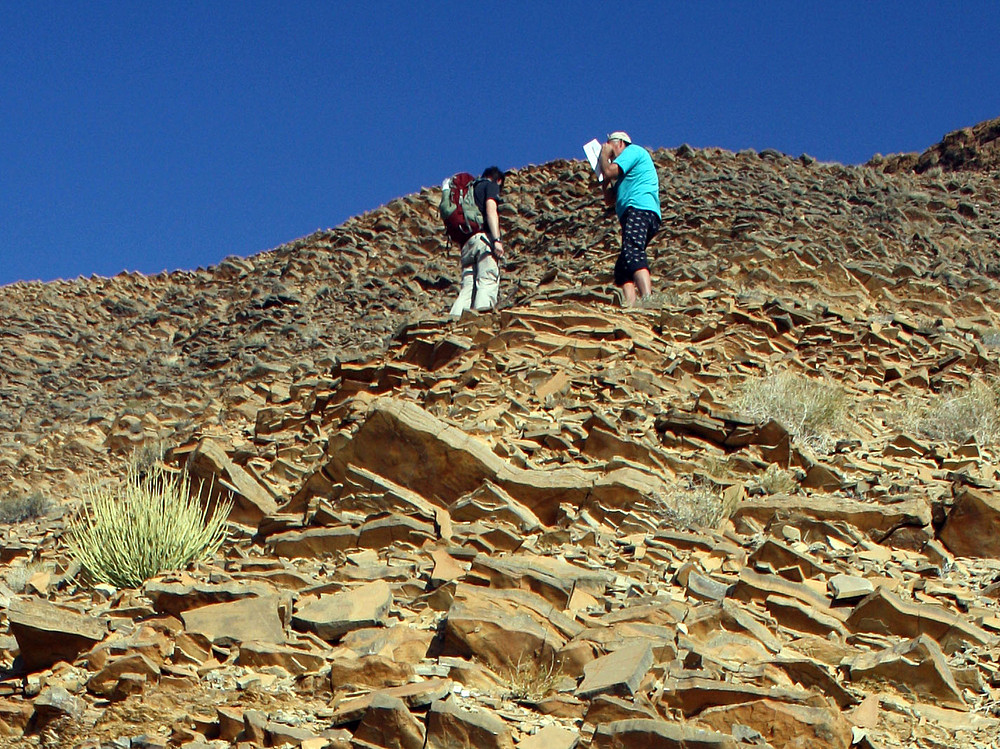
Richoz' Forschungskollegen Matthew Clarkson (Edinburgh) und Leopold Krystyn (Wien) beim Probennehmen im Oman ©Uni Graz/Richoz
©Uni Graz/Richoz

Richoz' Forschungskollegen Matthew Clarkson (Edinburgh) und Leopold Krystyn (Wien) beim Probennehmen im Oman

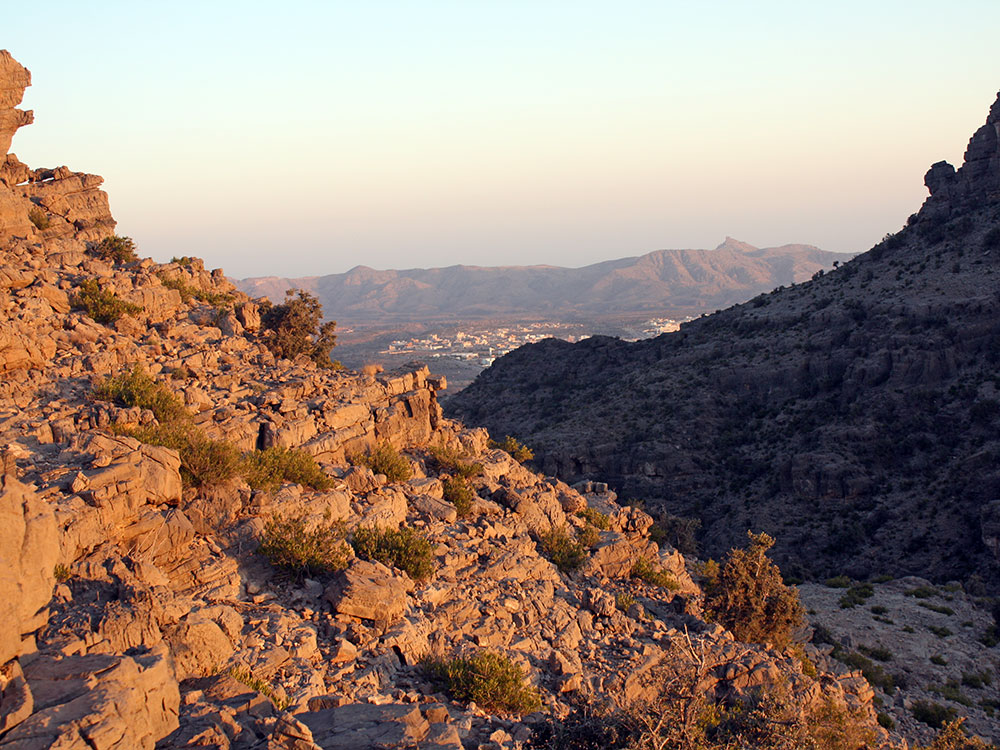
Ablagerungen aus der Zeit des Unterrias, also vor rund 250 Millionen Jahren. Fotos: Uni Graz/Richoz ©Uni Graz/Richoz
©Uni Graz/Richoz

Ablagerungen aus der Zeit des Unterrias, also vor rund 250 Millionen Jahren. Fotos: Uni Graz/Richoz

Erdwissenschafter der Uni Graz entdeckt mögliche Ursache

Vor 252 Millionen Jahren kam es zum bislang größten Massensterben der Erdgeschichte. 80 bis 90 Prozent aller Arten wurden binnen kürzester Zeit ausgerottet, und das Ökosystem benötigte fünf Millionen Jahre, um sich zu erholen. Was genau den Lebewesen so hart zusetzte, ist noch nicht restlos erforscht. Priv.-Doz. Dr. Sylvain Richoz vom Institut für Erdwissenschaften der Uni Graz fand mit KollegInnen aus Wien und Großbritannien in der chemischen Zusammensetzung der Ozeane einen Puzzlestein zur Lösung des Rätsels.
Die Ergebnisse wurden in der neuesten Ausgabe des Fachjournals Nature Communications veröffentlicht. Sie geben auch Aufschluss über aktuelle Entwicklungen, da sich marine „Totzonen“ mit sauerstoffarmem Wasser derzeit entlang vieler Küsten der Welt ausbreiten.

„Bislang ging man davon aus, dass mangelnder Sauerstoff im Meerwasser zu dem Massensterben geführt hat“, erklärt Richoz. „Unter solchen Bedingungen bauen gewisse Bakterien abgetötete Lebewesen ab und produzieren dabei Schwefelsäure, die besonders giftig für marines Leben ist.“ Die neuen Untersuchungen zeigten nun, dass die Periode des Sauerstoffmangels nur kurz dauerte, allerdings in Abständen wiederkehrte und damit in der Zwischenzeit entstandene Arten erneut ausrottete. Außerdem stellte das Team fest, dass im Meerwasser vor mehr als 250 Millionen Jahren keine Schwefelsäure, dafür reichlich Eisen vorhanden war. „Das ist für uns eine große Überraschung, denn Eisen gab es nur in den Ur-Ozeanen vor der Evolution der Lebewesen“, schildert der Erdwissenschafter. Die ForscherInnen vermuten, dass hohe Lufttemperaturen chemische Verwitterungsprozesse an Land begünstigten, die folglich den Eisenfluss ins Meer verursachten.
Für die Studie analysierte das Team das Gestein von Bergen im Oman, das aus den Sedimenten der einstigen Tethys-See besteht, eines Ozeans im Osten des damaligen Superkontinents Pangaea. „Die Erkenntnisse haben zahlreiche Auswirkungen auf unser Verständnis über die chemische Zusammensetzung des Meerwassers und eröffnen viele neue Forschungswege“, betont Richoz.

Publikation:
M.O. Clarkson, R.A. Wood, S.W. Poulton, S. Richoz, R.J. Newton, S.A. Kasemann, F. Bowyer, L. Krystyn: "Dynamic anoxic-ferruginous conditions during the end-Permian mass extinction and recovery” in Nature Communications
DOI 10.1038/NCOMMS12236

created by Dagmar Eklaude

Related news

The Nazi elite school Napola: Historian seeks memories and personal documents

They were to be brought up to become the future elite of National Socialism: boys and girls aged ten and over who, following the ‘Anschluss’ of Austria to the German Reich, attended a so-called Napola (short for Nationalpolitische Lehranstalt; also known as NPEA, Nationalpolitische Erziehungsanstalt). There were nine such institutions in what is now Austria between 1939 and 1945.

Heat-resistant: Eva Preinfalk explains how cities can protect their residents

Certain demographic and some occupational groups are particularly vulnerable to high temperatures. A range of measures is needed to provide relief for everyone, explains climate economist Eva Preinfalk.

Baby health: University of Graz is seeking study participants to investigate early risk factors

Why does the body composition of babies vary so much? Some children gain a significant amount of fat mass within a few weeks, whilst others show hardly any change over the same period. “At the same time, initial observations suggest that fat distribution in all babies may follow a similar pattern, regardless of their total body fat,” explains Marco Höfler from the Institute of Movement Sciences, Sport and Health at the University of Graz. He is coordinating the research project ‘Small Bodies – Big Questions’, for which participants are currently still being sought: pregnant women and babies up to four weeks old.

In hot water: New Report reveals record losses in glaciers, permafrost and snow cover

Climate change is driving up temperatures not only in summer. Winters are also getting warmer – with dramatic consequences for glaciers, permafrost, snow cover and the freezing of lakes. The recently published cryosphere report provides specific figures for Austria. “Our monitoring shows a clear trend with record losses of ice and snow,” says project leader Wolfgang Schöner from the University of Graz.

Begin of page section:
Additional information:

University of Graz
Universitaetsplatz 3
8010 Graz
Austria
  • Contact
  • Web Editors
  • Moodle
  • UNIGRAZonline
  • Imprint
  • Data Protection Declaration
  • Accessibility Declaration
Weatherstation
Uni Graz

End of this page section. Go to overview of page sections

End of this page section. Go to overview of page sections

Begin of page section:

End of this page section. Go to overview of page sections