



Begin of page section:
Page sections:

  • Go to contents (Accesskey 1)
  • Go to position marker (Accesskey 2)
  • Go to main navigation (Accesskey 3)
  • Go to sub navigation (Accesskey 4)
  • Go to additional information (Accesskey 5)
  • Go to page settings (user/language) (Accesskey 8)
  • Go to search (Accesskey 9)

End of this page section. Go to overview of page sections

Begin of page section:
Page settings:

English en
Deutsch de
Search
Login

End of this page section. Go to overview of page sections

Begin of page section:
Search:

Search for details about Uni Graz
Close

End of this page section. Go to overview of page sections


Search

Begin of page section:
Main navigation:

Page navigation:

  • University

    University
    • About the University
    • Organisation
    • Faculties
    • Library
    • Working at University of Graz
    • Campus
    Developing solutions for the world of tomorrow - that is our mission. Our students and our researchers take on the great challenges of society and carry the knowledge out.
  • Research Profile

    Research Profile
    • Our Expertise
    • Research Questions
    • Research Portal
    • Promoting Research
    • Research Transfer
    • Ethics in Research
    • Commission for Scientific Integrity
    Scientific excellence and the courage to break new ground. Research at the University of Graz creates the foundations for making the future worth living.
  • Studies

    Studies
    • Prospective Students
    • Students
  • Community

    Community
    • International
    • Location
    • Research and Business
    • Alumni
    The University of Graz is a hub for international research and brings together scientists and business experts. Moreover, it fosters the exchange and cooperation in study and teaching.
  • Spotlight
Topics
  • Sustainable University
  • Researchers answer
  • Work for us
Close menu

End of this page section. Go to overview of page sections

Begin of page section:
You are here:

University of Graz News Innovation im Fluss

End of this page section. Go to overview of page sections

Monday, 22 October 2018

Innovation im Fluss
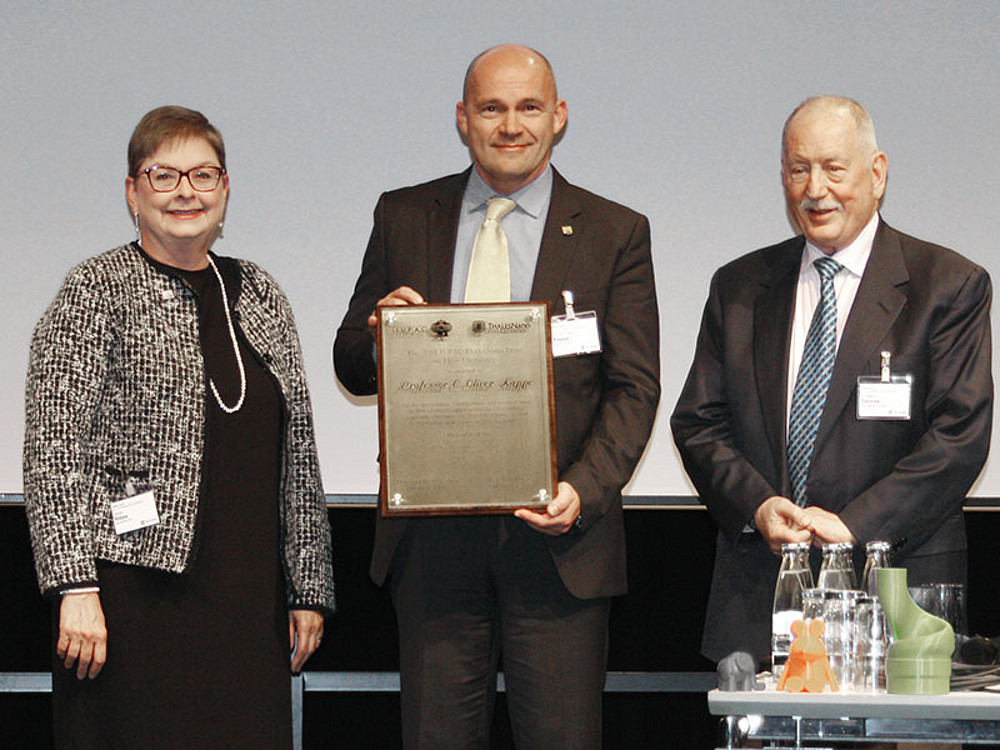
Carolyn Ribes von der IUPAC und Ferenc Darvas, Vorsitzender der ThalesNano and Flow Chemistry Society (r.), überreichten C. Oliver Kappe in Karlsruhe den IUPAC-ThalesNano Prize for Flow Chemistry. Foto: IUPAC
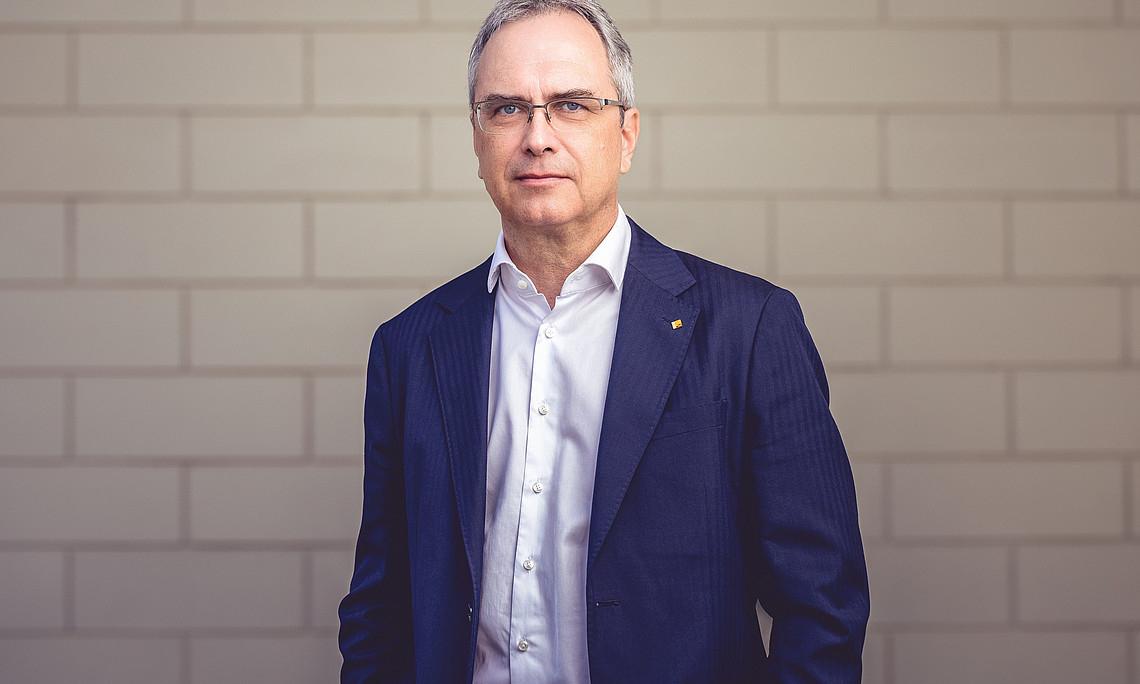
Carolyn Ribes von der IUPAC und Ferenc Darvas, Vorsitzender der ThalesNano and Flow Chemistry Society (r.), überreichten C. Oliver Kappe in Karlsruhe den IUPAC-ThalesNano Prize for Flow Chemistry. Foto: IUPAC

Oliver Kappe erhält internationale Auszeichnung für seine herausragenden Leistungen in der Flow-Chemie

Mit seinen Arbeiten in der Flow-Chemie zählt C. Oliver Kappe international zu den führenden WissenschafterInnen auf diesem Gebiet. Dafür hat die International Union of Pure and Applied Chemistry (IUPAC) dem Forscher der Universität Graz den ThalesNano-Preis 2018 verliehen. Die mit 10 000 US Dollar, knapp 8 700 Euro, dotierte Auszeichnung wurde Kappe am 21. Oktober bei der International Conference on Micro Reaction Technology (IMRET) in Karlsruhe überreicht.

Die Flow-Chemie ist ein Synthese-Verfahren, das im Vergleich zu herkömmlichen Methoden Zeit und Kosten spart und darüber hinaus auch umweltfreundlicher ist. Die für eine chemische Synthese benötigten Substanzen werden durch Reaktionskammern im Milliliterbereich gepumpt, in denen die einzelnen Prozesse kontinuierlich nacheinander ablaufen. Extreme Temperatur- und Druckbedingungen beschleunigen die Reaktionen, und zwischen den einzelnen Schritten fallen keine Abfallprodukte an.

C. Oliver Kappe ist Professor für Chemie an der Universität Graz und wissenschaftlicher Leiter des Center for Continuous Flow Synthesis and Processing (CC FLOW) am Research Center Pharmaceutical Engineering GmbH (RCPE). Der IUPAC-ThalesNano-Preis würdigt Kappes außerordentlich großen Beitrag zur Entwicklung der Flow-Chemie sowie dazu, dass kontinuierliche Verfahren weltweit Anwendung in der Feinchemie und Pharma-Industrie finden.
Kappe ist seit 2010 Vorstandsmitglied der Flow Chemistry Society und Chefredakteur des Journal of Flow Chemistry, das er 2011 begründete. Pionierarbeit leistete der Forscher zuvor auch in der Mikrowellen-Chemie.

Als Träger des Preises, der vom ungarischen Technologie-Unternehmen ThalesNano gestiftet und heuer zum vierten Mal verliehen wurde, ist Kappe der erste Forscher im deutschsprachigen Raum, der diese Auszeichnung erhielt, nach Kollegen des MIT/USA, der University of Cambridge/UK und der TU Eindhoven/NL.

created by Gudrun Pichler

Related news

Higher Education Strategy 2040: Austria’s universities on course for the future

Austria has 77 higher education institutions, which is above the EU average – but does this really make sense? The new Higher Education Strategy 2040 focuses on cooperation rather than mergers. As one of the six largest universities in Austria, the University of Graz plays a central role in this.

Climate research in Greenland: Old data provides new insights

The polar explorer and University of Graz professor Alfred Wegener left behind a unique collection of climate data from Greenland. A research team from the University of Graz is now analysing this 100-year-old treasure trove of data and comparing it with current measurements.

Diversity in nature and science: How we talk about plants and each other

Ginkgo, kiwi, hemp: they exist as male and female plants. Anyone who paid attention in biology class will confirm this. But is this categorisation, established by Carl von Linné almost 300 years ago, still valid today? An interdisciplinary team at the University of Graz is questioning these attributions and using this as a starting point to provide food for thought for gender-sensitive interaction between students, scientific and teaching staff.

Around the world in eight stops: the Long Night of Research at the University of Graz

On 24 April from 5 pm, you can take a short trip around the globe at the University of Graz, discovering pecularities of foreign countries or new local features in the entrance hall of the University Library. The itinerary takes you through introduced animal species, political attitudes and the omnipotence of algorithms. There will also be a programme in the historic reading hall, as well as at the UniGraz@Museum and the University Archive.

Begin of page section:
Additional information:

University of Graz
Universitaetsplatz 3
8010 Graz
Austria
  • Contact
  • Web Editors
  • Moodle
  • UNIGRAZonline
  • Imprint
  • Data Protection Declaration
  • Accessibility Declaration
Weatherstation
Uni Graz

End of this page section. Go to overview of page sections

End of this page section. Go to overview of page sections

Begin of page section:

End of this page section. Go to overview of page sections


