



Begin of page section:
Page sections:

  • Go to contents (Accesskey 1)
  • Go to position marker (Accesskey 2)
  • Go to main navigation (Accesskey 3)
  • Go to sub navigation (Accesskey 4)
  • Go to additional information (Accesskey 5)
  • Go to page settings (user/language) (Accesskey 8)
  • Go to search (Accesskey 9)

End of this page section. Go to overview of page sections

Begin of page section:
Page settings:

English en
Deutsch de
Search
Login

End of this page section. Go to overview of page sections

Begin of page section:
Search:

Search for details about Uni Graz
Close

End of this page section. Go to overview of page sections


Search

Begin of page section:
Main navigation:

Page navigation:

  • University

    University
    • About the University
    • Organisation
    • Faculties
    • Library
    • Working at University of Graz
    • Campus
    Developing solutions for the world of tomorrow - that is our mission. Our students and our researchers take on the great challenges of society and carry the knowledge out.
  • Research Profile

    Research Profile
    • Our Expertise
    • Research Questions
    • Research Portal
    • Promoting Research
    • Research Transfer
    • Ethics in Research
    • Commission for Scientific Integrity
    Scientific excellence and the courage to break new ground. Research at the University of Graz creates the foundations for making the future worth living.
  • Studies

    Studies
    • Prospective Students
    • Students
    • Registration for Study Programme (Winter semester 2026/27)
  • Community

    Community
    • International
    • Location
    • Research and Business
    • Alumni
    The University of Graz is a hub for international research and brings together scientists and business experts. Moreover, it fosters the exchange and cooperation in study and teaching.
Topics
  • Sustainable University
  • Researchers answer
  • Work for us
Close menu

End of this page section. Go to overview of page sections

Begin of page section:
You are here:

University of Graz News In die Zukunft schauen

End of this page section. Go to overview of page sections

Thursday, 21 January 2016

In die Zukunft schauen
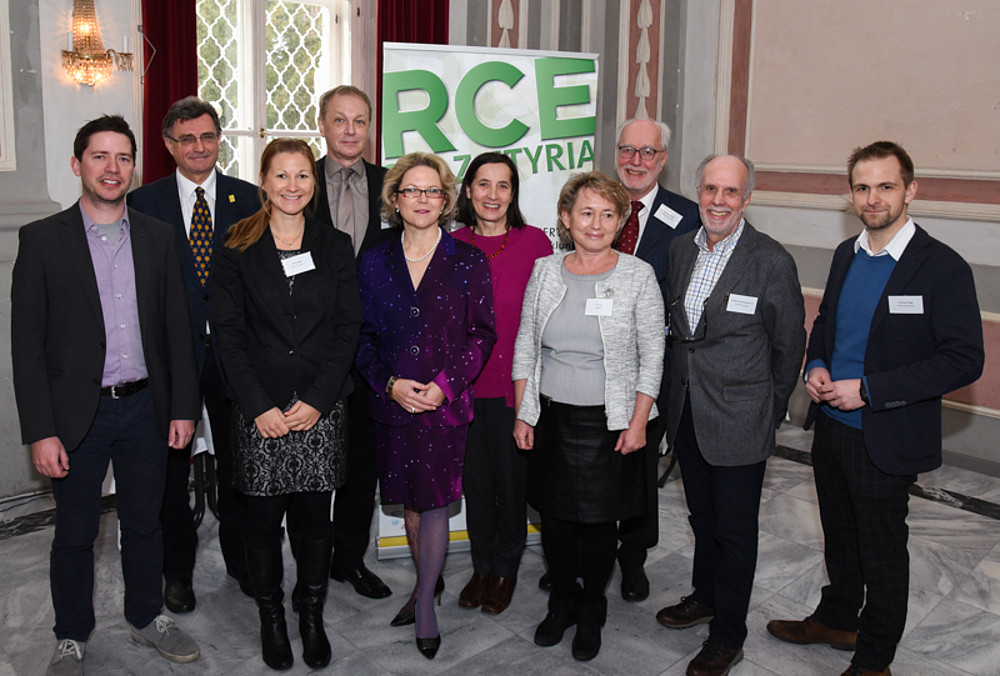
Gemeinsam für eine nachhaltige Zukunf

Mag. Lukas Priebsch, SUPERAR Kinderchor, Dr. Günther Pfaffenwimmer, Bundesministerium für Bildung und Frauen, Mag. Petra Wlasak, RCE, Dr. Peter Iwaniewicz, Bundesministerium für Land- und Forstwirtschaft, Gemeinderätin Univ.-Prof. Dr. Daisy Kopera, Mag. Gabriele Eschig, Österreichische UNESCO Kommission, Dr. Evi Frei, Bundesministerium für Wissenschaft, Forschung und Wirtschaft, Dr. Hermann Becke, SEKEM Österreich, O.Univ.-Prof. Dr. Friedrich Zimmermann und Mag. Thomas Drage vom RCE (v.l.) Fotos: Uni Graz/Tzivanopoulos
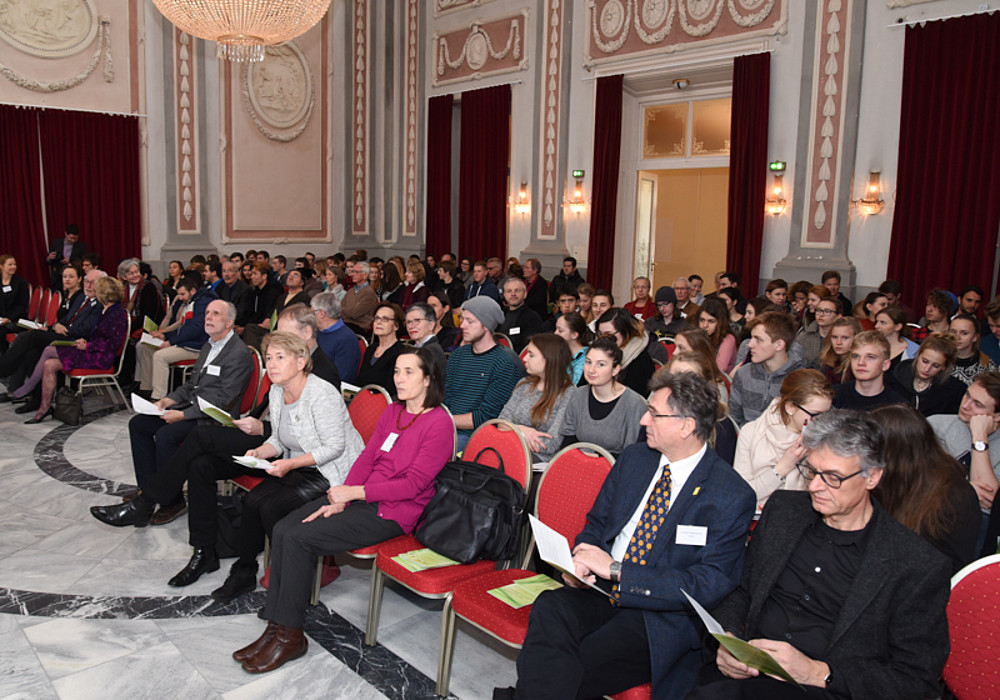
Großer Andrangim Meerscheinschlössl der Uni Graz.
Großer Andrangim Meerscheinschlössl der Uni Graz.

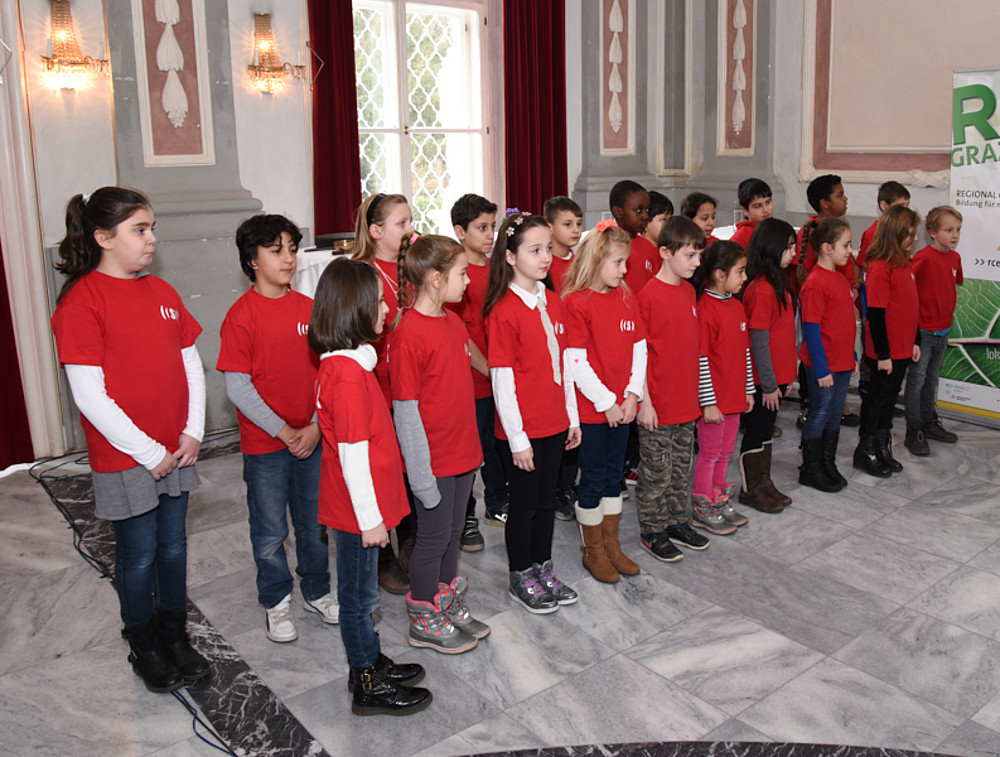
Der SUPERRAR Kinderchor sorgte für die gesangliche Einstimmung.

Der SUPERRAR Kinderchor sorgte für die gesangliche Einstimmung.

UNESCO-Global Action Programme für Bildung für nachhaltige Entwicklung gestartet.

Nachhaltige Entwicklung leben und die ökonomischen, ökologischen, kulturellen und sozialen Dimensionen dieses Handelns schärfen: Bei einer Tagung am 21. Jänner 2016 an der Uni Graz warfen Nachhaltigkeits-ExpertInnen in interaktiven Workshops einen Blick auf Projekte aus dem Global Action Programme (GAP) on Education for Sustainable Development, das von den Vereinten Nationen im Herbst 2014 zur Stärkung und Umsetzung nachhaltiger Ziele auf internationaler Ebene ins Leben gerufen. Eingeleitet wurde die Veranstaltung mit zwei Gesangsstücken vom SUPERAR-Kinderchor, den Abschluss bildete eine Podiumsdiskussion, die von RCE-Graz-Styria-Zentrumsleiter O.Univ.-Prof. Dr. Friedrich Zimmermann geleitet wurde.

created by Konstantinos Tzivanopoulos

Related news

"Mathematics explains the world"

How can life be quantified? And what can science reveal that remains hidden from the naked eye? The 14th European Conference on Mathematical and Theoretical Biology at the University of Graz is dedicated to these questions. From 13 to 17 July, around 1,300 researchers from all over the world will gather on campus to discuss models, biological processes and the future of data-driven medicine. Klemens Fellner, Dean of the Faculty of Natural Sciences and Mathematics and a mathematician, talks about the language that explains the world

Internationally up-to-date: University of Graz offers new degree programmes in art studies

From the Old Masters to AI art – three newly designed degree programmes offer students at the University of Graz fresh perspectives on artistic production. In addition to historical art, the programmes place a greater emphasis on contemporary and global developments. The registration period is open.

The Nazi elite school Napola: Historian seeks memories and personal documents

They were to be brought up to become the future elite of National Socialism: boys and girls aged ten and over who, following the ‘Anschluss’ of Austria to the German Reich, attended a so-called Napola (short for Nationalpolitische Lehranstalt; also known as NPEA, Nationalpolitische Erziehungsanstalt). There were nine such institutions in what is now Austria between 1939 and 1945.

Heat-resistant: Eva Preinfalk explains how cities can protect their residents

Certain demographic and some occupational groups are particularly vulnerable to high temperatures. A range of measures is needed to provide relief for everyone, explains climate economist Eva Preinfalk.

Begin of page section:
Additional information:

University of Graz
Universitaetsplatz 3
8010 Graz
Austria
  • Contact
  • Web Editors
  • Moodle
  • UNIGRAZonline
  • Imprint
  • Data Protection Declaration
  • Accessibility Declaration
Weatherstation
Uni Graz

End of this page section. Go to overview of page sections

End of this page section. Go to overview of page sections

Begin of page section:

End of this page section. Go to overview of page sections