Begin of page section:
Page sections:

  • Go to contents (Accesskey 1)
  • Go to position marker (Accesskey 2)
  • Go to main navigation (Accesskey 3)
  • Go to sub navigation (Accesskey 4)
  • Go to additional information (Accesskey 5)
  • Go to page settings (user/language) (Accesskey 8)
  • Go to search (Accesskey 9)

End of this page section. Go to overview of page sections

Begin of page section:
Page settings:

English en
Deutsch de
Search
Login

End of this page section. Go to overview of page sections

Begin of page section:
Search:

Search for details about Uni Graz
Close

End of this page section. Go to overview of page sections


Search

Begin of page section:
Main navigation:

Page navigation:

  • University

    University
    • About the University
    • Organisation
    • Faculties
    • Library
    • Working at University of Graz
    • Campus
    Developing solutions for the world of tomorrow - that is our mission. Our students and our researchers take on the great challenges of society and carry the knowledge out.
  • Research Profile

    Research Profile
    • Our Expertise
    • Research Questions
    • Research Portal
    • Promoting Research
    • Research Transfer
    • Ethics in Research
    • Commission for Scientific Integrity
    Scientific excellence and the courage to break new ground. Research at the University of Graz creates the foundations for making the future worth living.
  • Studies

    Studies
    • Prospective Students
    • Students
  • Community

    Community
    • International
    • Location
    • Research and Business
    • Alumni
    The University of Graz is a hub for international research and brings together scientists and business experts. Moreover, it fosters the exchange and cooperation in study and teaching.
  • Spotlight
Topics
  • Sustainable University
  • Researchers answer
  • Work for us
Close menu

End of this page section. Go to overview of page sections

Begin of page section:
You are here:

University of Graz News Großer Gefrierschrank der Gemeinde: „coole“ Geschichten über Tiefkühlhäuser in der Steiermark

End of this page section. Go to overview of page sections

Friday, 28 July 2023

Großer Gefrierschrank der Gemeinde: „coole“ Geschichten über Tiefkühlhäuser in der Steiermark

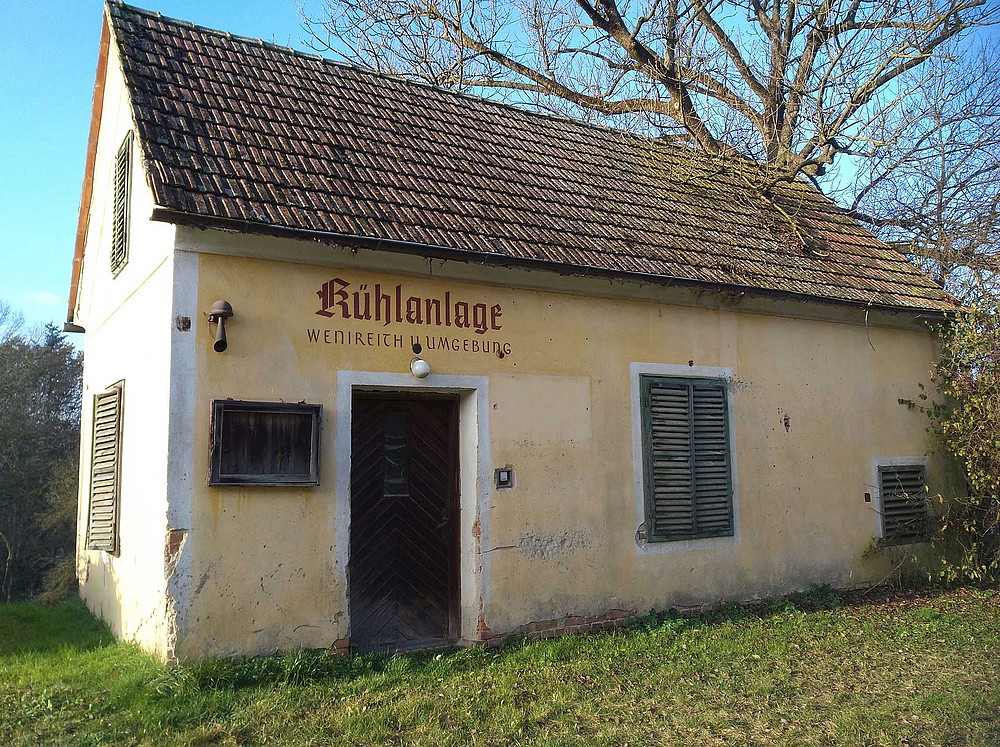
Kühlhaus

Abgetaut: Eines von 800 Kühlhäusern in der Steiermark. Foto: Jeitler

Einst waren sie heiß begehrt, heute sind sie kaltgestellt: Tiefkühlhäuser in der Steiermark. Rechtshistorikerin Anita Ziegerhofer und Kulturanthropologe Helmut Eberhart haben sich auf eine frostige Spurensuche begeben und diese in Buchform für die Nachwelt „eingefroren“.

Rein in einen riesigen Gefrierschrank. Mitten im heißen Juli. Für den Verfasser dieses Artikels in den 1970er-Jahren ein Abenteuer. Als die Großmutter den Schweinsbraten von der letzten Schlachtung aus ihrem gemieteten Fach holte. Im Kühlhaus in Gersdorf bei Spielfeld. Einem von einst mehr als 800 Tiefkühlhäusern in der Steiermark, die heute teilweise abgerissen sind, zum Teil aber auch als kulturgeschichtliche Denkmäler anderwärtig genutzt werden. Etwa 50 sind sogar noch in Betrieb, wie Ziegerhofer und Eberhart recherchiert haben.

Ab 1955 entstanden Tiefkühlhäuser in der Steiermark. 500 davon haben die beiden Wissenschaftler:innen im Zuge ihrer Forschungsarbeit aufgespürt. „Die Häuser waren reine Zweckbauten mit weitgehendem Verzicht auf Ästhetik“, erklärt Anita Ziegerhofer. „Sie wurden zugleich zu einem Prestigeobjekt eines Ortes, das die Dorfgemeinschaft auf Gemeinde- oder Privatgrund in unzähligen Arbeitsstunden errichtete.“

Revolution am Land

Die Nutzung der Gebäude als Tiefkühlhaus ist Geschichte. Sie sind aber heute noch Ausdruck dafür, wie sie einst das Leben am Land massiv veränderten. „Außen unscheinbar barg es innen eine Revolution in Form von tiefgefrorenem Fleisch, Gemüse, Obst, Brot und Kuchen“, schildert Helmut Eberhart. „denn die Köstlichkeiten konnten nun auch am Land saisonunabhängig jeden Tag genossen werden – ganz wie in der Stadt.“
Viele Erzählungen und Berichte haben die Rechtshistorikerin und der Kulturanthropologe gesammelt. Historische Fotografien sind hingegen spärlich vorhanden. „Das bezeugt, dass die Häuser nie als etwas Besonderes wahrgenommen wurden, sondern einfach da waren“, begründen die Forscher:innen.

Das Buch „Frostige Spurensuche. Die Geschichte der Tiefkühlhäuser in der Steiermark“ ist im Leykamverlag erschienen.
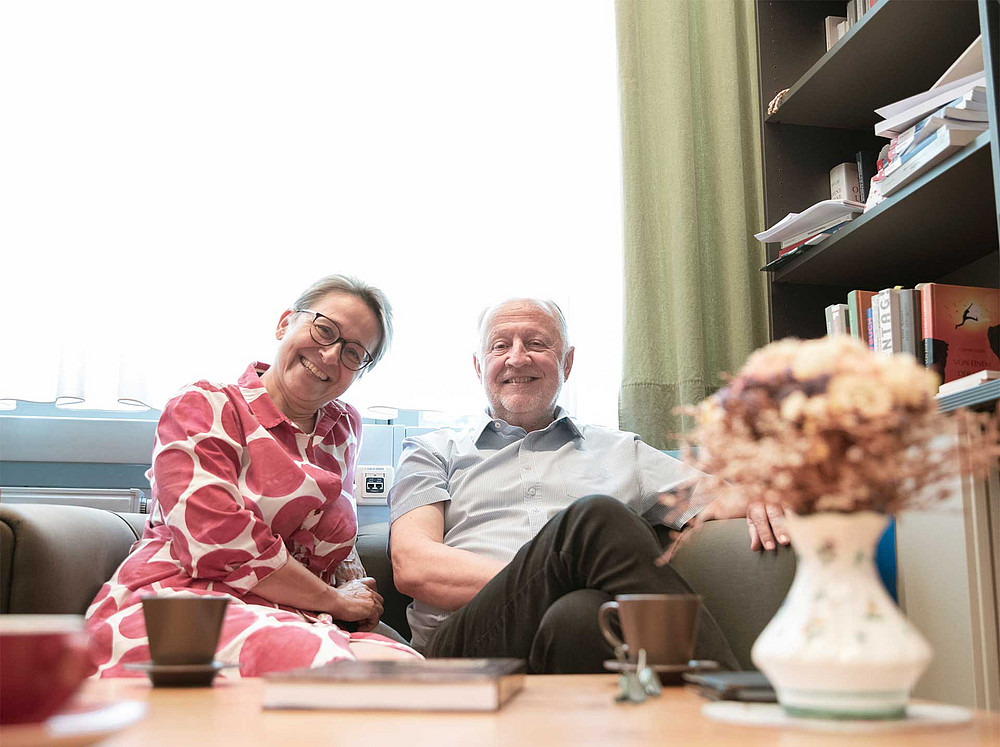
 

Anita Ziegerhofer und Helmut Eberhart
Rechtshistorikerin Anita Ziegerhofer und Kulturanthropologe Helmut Eberhart zeigen die kulturgeschichtliche Bedeutung von Kühlhäusern auf. Foto: Uni Graz/Tzivanopoulos
created by Andreas Schweiger

Related news

Interpreting data: Why studies sometimes get it wrong

Hilmar Brohmer and Ziva Korda from the Institute of Psychology, together with 500 international colleagues, have re-evaluated a hundred scientific publications and have often come to different conclusions.

Crystal-clear: AI method revolutionises solar observation

The Sun makes life on Earth possible. However, its magnetic fields can also cause massive disruption. This makes it all the more important to gain a better understanding of the processes taking place on our nearest star. A research team from the University of Graz and the High Altitude Observatory in Boulder (USA) has succeeded in doing just that. The astrophysicists have developed an AI-supported method that makes even the smallest structures on the Sun visible. The scientists are convinced that this will bring about a lasting change in solar observation and that the new method can be used for the planned European Solar Telescope.

Long Night of Research: How many languages are there in the world?

From a linguistic perspective, there are worlds of difference between Bern, Berlin and Vienna. A dialect impersonator will demonstrate live just how varied German can sound. How many languages are there in the world? What are their distinctive features? Which of these are spoken in Austria? These and other questions will be answered during the Long Night of Research at the University of Graz: on Friday, 24 April 2025, from 5 pm to 11 pm, in the University Library. Visitors can immerse themselves in the diversity of languages without travelling far by taking part in a quiz at the station.

Dual role: Researchers show that platelets can worsen disease

Platelets are best known as rapid responders in the event of injury. They stop bleeding and are indispensable for wound healing. “However, thrombocytes can also aggravate diseases, especially when inflammatory processes are involved,” explains Marion Mußbacher, a pharmacist at the University of Graz. She investigated the “dual role” of platelets in relation to fatty liver disease, a condition closely linked to obesity and type 2 diabetes.

Begin of page section:
Additional information:

University of Graz
Universitaetsplatz 3
8010 Graz
Austria
  • Contact
  • Web Editors
  • Moodle
  • UNIGRAZonline
  • Imprint
  • Data Protection Declaration
  • Accessibility Declaration
Weatherstation
Uni Graz

End of this page section. Go to overview of page sections

End of this page section. Go to overview of page sections

Begin of page section:

End of this page section. Go to overview of page sections