



Begin of page section:
Page sections:

  • Go to contents (Accesskey 1)
  • Go to position marker (Accesskey 2)
  • Go to main navigation (Accesskey 3)
  • Go to sub navigation (Accesskey 4)
  • Go to additional information (Accesskey 5)
  • Go to page settings (user/language) (Accesskey 8)
  • Go to search (Accesskey 9)

End of this page section. Go to overview of page sections

Begin of page section:
Page settings:

English en
Deutsch de
Search
Login

End of this page section. Go to overview of page sections

Begin of page section:
Search:

Search for details about Uni Graz
Close

End of this page section. Go to overview of page sections


Search

Begin of page section:
Main navigation:

Page navigation:

  • University

    University
    • About the University
    • Organisation
    • Faculties
    • Library
    • Working at University of Graz
    • Campus
    Developing solutions for the world of tomorrow - that is our mission. Our students and our researchers take on the great challenges of society and carry the knowledge out.
  • Research Profile

    Research Profile
    • Our Expertise
    • Research Questions
    • Research Portal
    • Promoting Research
    • Research Transfer
    • Ethics in Research
    • Commission for Scientific Integrity
    Scientific excellence and the courage to break new ground. Research at the University of Graz creates the foundations for making the future worth living.
  • Studies

    Studies
    • Prospective Students
    • Students
    • Registration for Study Programme (Winter semester 2026/27)
    • Study Days 22-26 June 2026
  • Community

    Community
    • International
    • Location
    • Research and Business
    • Alumni
    The University of Graz is a hub for international research and brings together scientists and business experts. Moreover, it fosters the exchange and cooperation in study and teaching.
Topics
  • Sustainable University
  • Researchers answer
  • Work for us
Close menu

End of this page section. Go to overview of page sections

Begin of page section:
You are here:

University of Graz News Geschmeidige Synapsen

End of this page section. Go to overview of page sections

Friday, 30 September 2016

Geschmeidige Synapsen

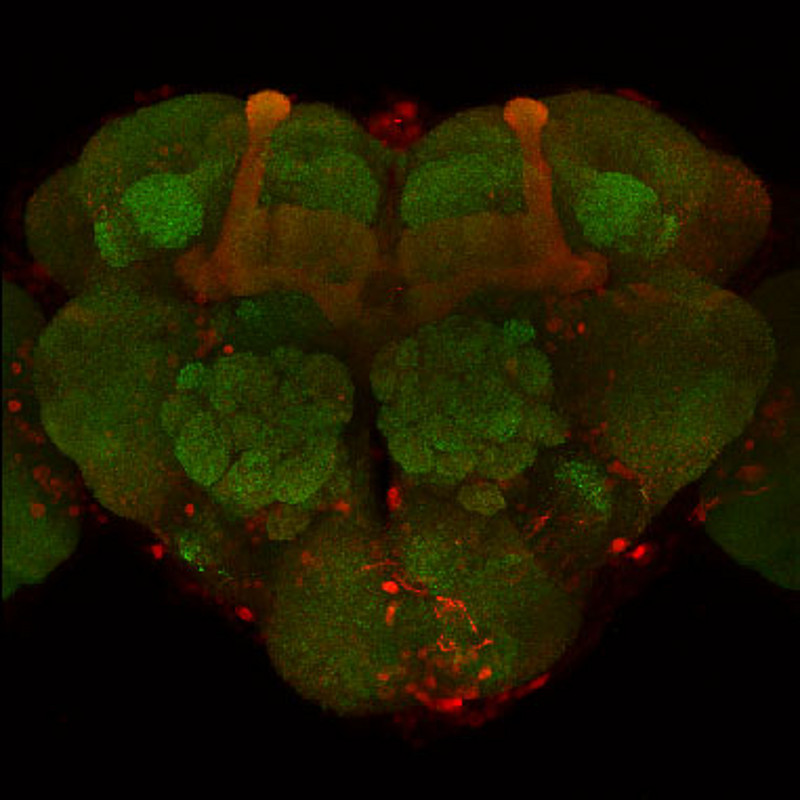
Mikroskopische Fluoreszenz-Aufnahme eines Drosophila-Gehirns von gealterten Fliegen, die an Morbus Parkinson leiden. Es sind sowohl synaptische Verbindungen zwischen den Nervenzellen (grün) als auch die krankheitsauslösenden Proteine (rot) dargestellt.

Mikroskopische Fluoreszenz-Aufnahme eines Drosophila-Gehirns von gealterten Fliegen, die an Morbus Parkinson leiden. Es sind sowohl synaptische Verbindungen zwischen den Nervenzellen (grün) als auch die krankheitsauslösenden Proteine selbst (rot) dargestellt. Foto: Uni Graz/Institut für Molekulare Biowissenschaften.

Forschergruppe zeigt, wie Spermidin altersbedingten Gedächtnisschwund umkehrt

Gedächtnisdefizite im Alter können einer deutsch-österreichischen Studie zufolge unter Umständen durch die Einnahme des Polyamin-Moleküls Spermidin gemindert oder behoben werden. Diese natürliche Substanz könne bewirken, dass Synapsen im Gehirn ihre Fähigkeit auch im Alter beibehielten, Nervenzellen zu verbinden, fanden die WissenschafterInnen um Prof. Dr. Stephan Sigrist von der Freien Universität Berlin, Prof. Dr. André Fiala von der Georg-August-Universität Göttingen und Univ.-Prof.Dr. Frank Madeo von der Karl-Franzens-Universität Graz durch Untersuchungen an der Fruchtfliege Drosopila melanogaster heraus. Die Synapsen könnten nach der Behandlung auch weiterhin im Gehirn neue Erinnerungen kodieren. Aus den Ergebnissen könnten Strategien für die Bekämpfung altersbedingter Demenz abgeleitet werden. Die Studie wurde in der aktuellen Ausgabe der renommierten Zeitschrift PLOS Biology veröffentlicht.


Synapsen, die Neuronen in unserem Gehirn verbinden, kodieren kontinuierlich neue Erinnerungen. Doch die Fähigkeit dazu – dem Lernen – kann bei manchen Menschen im Alter in drastischem Tempo und Umfang schwinden. Die Wissenschafter der drei Universitäten fanden heraus, dass die altersbedingte Demenz durch Veränderungen auf der Ebene der Synapsen mit ausgelöst wird. Der menschliche Körper bildet das hiervor schützende Spermidin zwar selbst, doch mit zunehmendem Alter weniger effektiv. Eine Verabreichung der Substanz könne also der Gedächtnisleistung aufhelfen, vermuten die Forscher. Die Wissenschafter wählten die Fruchtfliege Drosophila melanogaster, weil hier Erinnerungsprozesse auf molekularer Ebene ähnlich verlaufen wie bei Menschen; das Insekt ist damit ein geeignetes Modell für die Simulation von Altersprozessen. Durch Fütterung von Spermidin gelang es, den Gedächtnisverfall zu unterdrücken. Die Studie erweitert Ergebnisse einer Studie der Wissenschafter aus dem Jahr 2013.

>> Publikation

created by Gerhild Kastrun

Related news

Full effort in the heat: the Sports Centre was in full swing at the Kleeblattlauf

On 19 June 2026, 2,000 runners and hundreds of supporters made their way to the Rosenhain for a sporting end-of-term event.

Save, invest or guarantee: What Austrians expect from the state

Austria needs to make savings. But where? And what should the Republic actually be spending its money on? The answers are provided by the initial findings of a major study involving the University of Graz. 99 per cent of those surveyed are in favour of the state ensuring healthcare provision. Almost three-quarters would like to see more public funding for education, whilst only around three per cent are in favour of cuts in this sector.

Science meets blockbuster: Campus cinema at the University of Graz

A cinematic treat for the scientific community: the courtyard of the University of Graz’s main building is once again being transformed into an atmospheric open-air cinema this year. From 29 June to 10 July 2026 (Mondays to Fridays from 8.30 pm), blockbusters and documentaries will be shown on the open-air screen. Academics from the University of Graz will be taking a closer look at the films shown, examining them to distinguish fact from fiction.

Complying with the norm: Why Do Standards Shape Our Lives, Elisabeth Staudegger?

Standards determine whether a sheet of paper fits in a printer or whether a charging plug can power multiple devices. These standards shape our everyday lives. But who actually sets these standards? Where are the weaknesses, and how could science help to improve them? Elisabeth Staudegger, Head of the ‘Law and IT’ Department at the Institute for Legal Foundations at the University of Graz, host the Academic Standards Day on 16 June. Here she relays how sciences can contribute to the topic of standardisation and reveals her personal favourite standard.

Begin of page section:
Additional information:

University of Graz
Universitaetsplatz 3
8010 Graz
Austria
  • Contact
  • Web Editors
  • Moodle
  • UNIGRAZonline
  • Imprint
  • Data Protection Declaration
  • Accessibility Declaration
Weatherstation
Uni Graz

End of this page section. Go to overview of page sections

End of this page section. Go to overview of page sections

Begin of page section:

End of this page section. Go to overview of page sections