



Begin of page section:
Page sections:

  • Go to contents (Accesskey 1)
  • Go to position marker (Accesskey 2)
  • Go to main navigation (Accesskey 3)
  • Go to sub navigation (Accesskey 4)
  • Go to additional information (Accesskey 5)
  • Go to page settings (user/language) (Accesskey 8)
  • Go to search (Accesskey 9)

End of this page section. Go to overview of page sections

Begin of page section:
Page settings:

English en
Deutsch de
Search
Login

End of this page section. Go to overview of page sections

Begin of page section:
Search:

Search for details about Uni Graz
Close

End of this page section. Go to overview of page sections


Search

Begin of page section:
Main navigation:

Page navigation:

  • University

    University
    • About the University
    • Organisation
    • Faculties
    • Library
    • Working at University of Graz
    • Campus
    Developing solutions for the world of tomorrow - that is our mission. Our students and our researchers take on the great challenges of society and carry the knowledge out.
  • Research Profile

    Research Profile
    • Our Expertise
    • Research Questions
    • Research Portal
    • Promoting Research
    • Research Transfer
    • Ethics in Research
    • Commission for Scientific Integrity
    Scientific excellence and the courage to break new ground. Research at the University of Graz creates the foundations for making the future worth living.
  • Studies

    Studies
    • Prospective Students
    • Students
    • Welcome Weeks for First Year Students
  • Community

    Community
    • International
    • Location
    • Research and Business
    • Alumni
    The University of Graz is a hub for international research and brings together scientists and business experts. Moreover, it fosters the exchange and cooperation in study and teaching.
Topics
  • Sustainable University
  • Researchers answer
  • Work for us
Close menu

End of this page section. Go to overview of page sections

Begin of page section:
You are here:

University of Graz News Gefährliche Klima-Schäden

End of this page section. Go to overview of page sections

Friday, 21 October 2016

Gefährliche Klima-Schäden
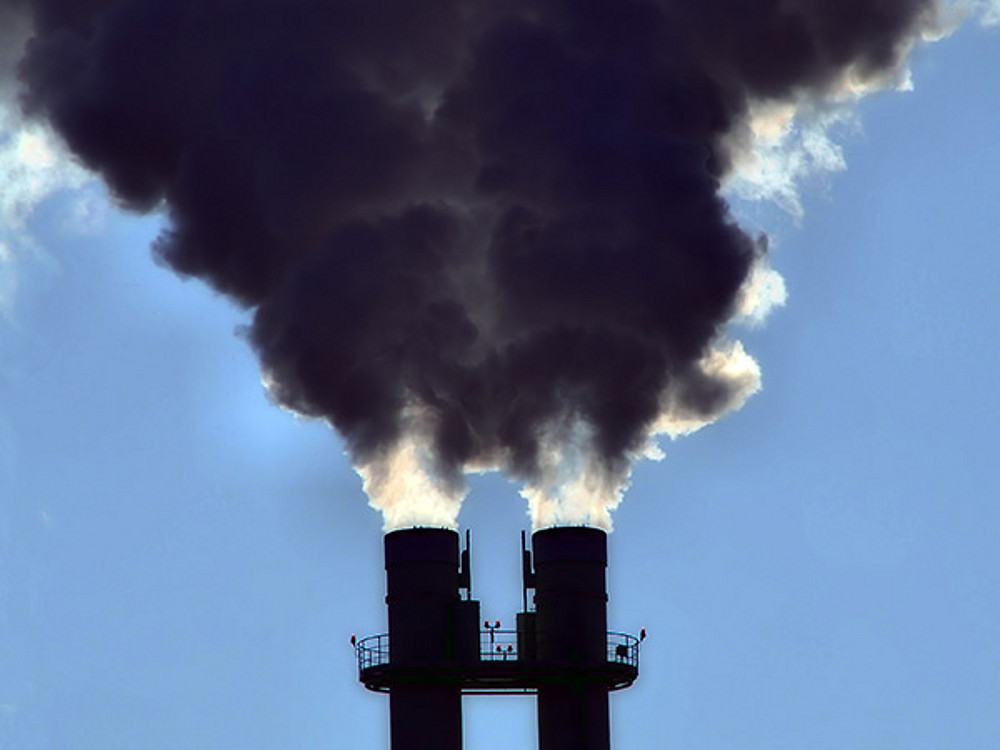
Industrienationen müssen auch Verantwortung für Schäden durch den Klimawandel übernehmen. Wie das funktionieren kann, zeigen Wissenschafter der Uni Graz in einer aktuellen Publikation. Foto: Uwe Bergeest / pixelio.de

Industrienationen müssen auch Verantwortung für Schäden durch den Klimawandel übernehmen. Wie das funktionieren kann, zeigen Wissenschafter der Uni Graz in einer aktuellen Publikation. Foto: Uwe Bergeest / pixelio.de

Forscher der Uni Graz präsentieren Strategien zur Bewältigung

Negative Auswirkungen der globalen Erwärmung sind selbst mit ambitionierten Maßnahmen nicht mehr zu verhindern. Der Klimavertrag von Paris enthält daher auch Überlegungen, wie mit bereits offensichtlichen, unvermeidbaren Risiken umgegangen werden soll. Wie diese bemessen werden und welchen Spielraum die Politik hat, um darauf zu reagieren, ist jedoch sehr vage definiert und wird höchst unterschiedlich ausgelegt. Dr. Thomas Schinko und Dr. Reinhard Mechler, die beide sowohl an der Uni Graz als auch am International Institute for Applied Systems Analysis in Laxenburg tätig sind, haben nun konkrete Vorschläge erarbeitet, um einen politischen Konsens zu erreichen. Diese sind unter dem Titel „Identifying the policy space for climate loss and damage“ in der heutigen Ausgabe des Fachmagazins Science erschienen.

Vom Klimawandel besonders betroffene Staaten der Südhemisphäre forderten bei den Pariser Vertragsverhandlungen vor allem Kompensationszahlungen für bereits erlittene Schäden. Die Industrienationen hingegen betonten die Notwendigkeit, das Risikomanagement zu verbessern, damit künftige Einbußen vermieden werden können. Thomas Schinko vom Wegener Center der Uni Graz und Reinhard Mechler, der auch an der WU Wien tätig ist, präsentieren in ihrer Publikation nun zwei Maßnahmenbündel, wie aktuelle und künftige Bedrohungen gemeinschaftlich angegangen werden können, ohne die großen CO2-Emittenten aus der Verantwortung zu entlassen. Die Wissenschafter fordern einerseits „kuratives Risikomanagement“, das sind jetzt zu setzende Schritte, um in Zukunft beispielsweise negative Auswirkungen des absehbaren Meeresspiegelanstiegs zu vermeiden. Andererseits sollten LandwirtInnen und BewohnerInnen von gefährdeten Regionen jetzt schon durch so genanntes „transformatives Risikomanagement“ dabei unterstützt werden, sich eine neue Lebensgrundlage zu suchen – etwa durch freiwillige Umsiedelungen oder Jobs im Bereich der erneuerbaren Energie. Außerdem sehen die beiden Wissenschafter eine von den Industrienationen finanzierte Versicherung als relevant an, die Klimaschäden in ärmeren Ländern kompensiert und Anpassungsmaßnahmen finanziert.

Die Überlegungen der Studie basieren auf der Risikoforschung sowie sozialwissenschaftlichen, ethischen und juristischen Arbeiten. Mechler und Schinko erarbeiten konkrete Lösungsvorschlägen für politische EntscheidungsträgerInnen, die auch beim nächsten Treffen der United Nations Framework Convention on Climate Change im November in Marokko thematisiert werden. Sie sind in persönlichem Kontakt mit den VerhandlerInnen des Weltklimaabkommens und haben hierzu ein praxisorientiertes „Loss and Damage Network“ ins Leben gerufen, an dem neben zahlreichen internationalen ExpertInnen auch der Philosoph und Klimaethiker Univ.-Prof. Dr. Lukas Meyer sowie das Doktoratskolleg Klimawandel der Uni Graz beteiligt sind.

Link zur Publikation

created by Dagmar Eklaude

Related news

Jurassic Sounds: Biologist reconstructs insect songs from 165 million years ago

It was apparently not just the roars of the dinosaurs that made up the soundscape of the animal world during the Jurassic period. Crickets and grasshoppers communicated through a variety of songs and high-pitched sounds, as Thorin Jonsson from the Institute of Biology at the University of Graz discovered together with colleagues from the universities of Lincoln, Bristol (UK), Beijing (China) and Tempe (USA). The findings on what are so far the oldest traces of sound on Earth have just been published in the journal PNAS.

EU funding boosts international exchange between universities

The University of Graz is further expanding its international study opportunities through the European university alliance Arqus and is taking the lead in two key projects. In future, students will benefit from even more joint degree programmes and from simplified recognition of academic achievements through the Joint European Degree Label.

Rescue and risks: Researchers have surveyed public perceptions of AI

The use of artificial intelligence has had to be made transparent since 2 August 2026. The EU’s AI Act, which has been in force since then, also sets out how risky an application is and which security measures apply as a result. However, the assessment of risks by the legislation differs in some cases significantly from the perceptions of the Austrian public. This is the finding of a representative study carried out by data scientist Stefan Thalmann from the University of Graz and his team.

The Healing Sea: Researchers discover new approaches to treating chronic inflammation in sponges

Chronic inflammation plays a key role in many diseases, ranging from metabolic disorders and cardiovascular diseases to tissue damage following injuries or infections. “Normally, the body is able to resolve inflammation on its own. If this process becomes unbalanced, immune cells remain permanently active and continue to drive negative changes in the tissue,” explains Andreas Koeberle, a pharmacist at the University of Graz.

Begin of page section:
Additional information:

University of Graz
Universitaetsplatz 3
8010 Graz
Austria
  • Contact
  • Web Editors
  • Moodle
  • UNIGRAZonline
  • Imprint
  • Data Protection Declaration
  • Accessibility Declaration
Weatherstation
Uni Graz

End of this page section. Go to overview of page sections

End of this page section. Go to overview of page sections

Begin of page section:

End of this page section. Go to overview of page sections