



Begin of page section:
Page sections:

  • Go to contents (Accesskey 1)
  • Go to position marker (Accesskey 2)
  • Go to main navigation (Accesskey 3)
  • Go to sub navigation (Accesskey 4)
  • Go to additional information (Accesskey 5)
  • Go to page settings (user/language) (Accesskey 8)
  • Go to search (Accesskey 9)

End of this page section. Go to overview of page sections

Begin of page section:
Page settings:

English en
Deutsch de
Search
Login

End of this page section. Go to overview of page sections

Begin of page section:
Search:

Search for details about Uni Graz
Close

End of this page section. Go to overview of page sections


Search

Begin of page section:
Main navigation:

Page navigation:

  • University

    University
    • About the University
    • Organisation
    • Faculties
    • Library
    • Working at University of Graz
    • Campus
    Developing solutions for the world of tomorrow - that is our mission. Our students and our researchers take on the great challenges of society and carry the knowledge out.
  • Research Profile

    Research Profile
    • Our Expertise
    • Research Questions
    • Research Portal
    • Promoting Research
    • Research Transfer
    • Ethics in Research
    • Commission for Scientific Integrity
    Scientific excellence and the courage to break new ground. Research at the University of Graz creates the foundations for making the future worth living.
  • Studies

    Studies
    • Prospective Students
    • Students
    • Welcome Weeks for First Year Students
  • Community

    Community
    • International
    • Location
    • Research and Business
    • Alumni
    The University of Graz is a hub for international research and brings together scientists and business experts. Moreover, it fosters the exchange and cooperation in study and teaching.
Topics
  • Sustainable University
  • Researchers answer
  • Work for us
Close menu

End of this page section. Go to overview of page sections

Begin of page section:
You are here:

University of Graz News Ein sachlicher Brückenbauer

End of this page section. Go to overview of page sections

Monday, 05 December 2016

Ein sachlicher Brückenbauer

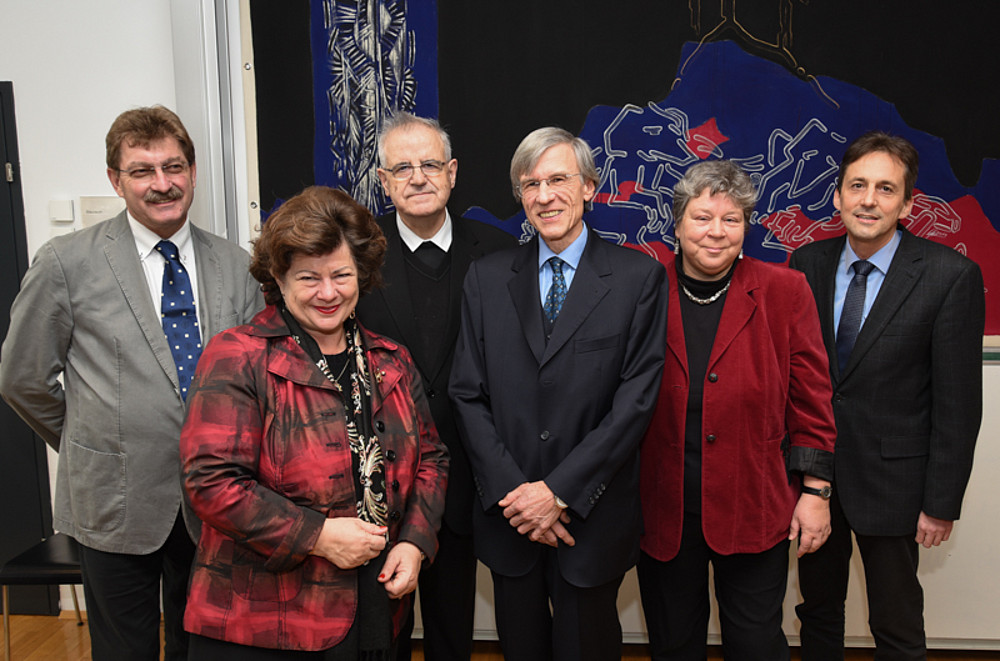
Karl Prenner (3.v.r.) geht in Pension, ein Symposium ehrte den Islam-Experten: Forschungs-Vizerektor Peter Scherrer, Elisabeth Potzinger, Heinrich Schnuderl, Ulrike Bechmann und Dekan Reinhold Esterbauer eröffneten das Fest. Fotos: Uni Graz/Tzivanopoulos

Karl Prenner (3.v.r.) geht in Pension, ein Symposium ehrte den Islam-Experten: Forschungs-Vizerektor Peter Scherrer, Elisabeth Potzinger, Heinrich Schnuderl, Ulrike Bechmann und Dekan Reinhold Esterbauer eröffneten das Fest. Fotos: Uni Graz/Tzivanopoulos

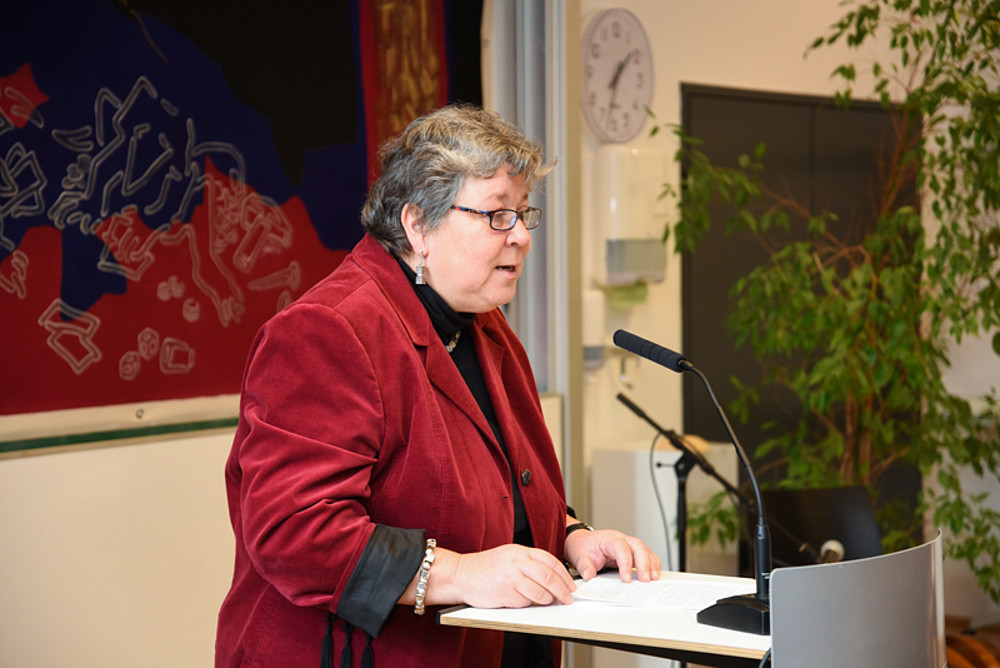
Würdigung durch Institutsleiterin Ulrike Bechmann.

Würdigung durch Institutsleiterin Ulrike Bechmann.

Dekan Esterbauer: "Karl Prenner ist ein Brückenbauer zum Islam"

Dekan Esterbauer: "Karl Prenner ist ein Brückenbauer zum Islam"

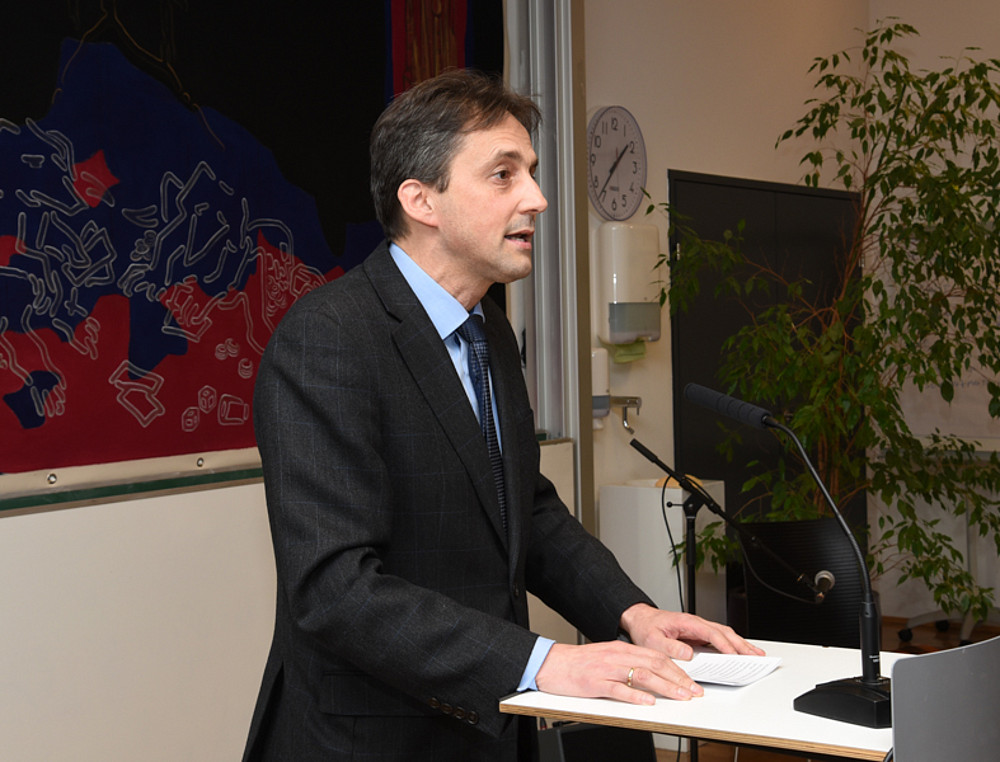
Peter Scherrer überreichte Glückwünsche vom Rektorat und kleine Andenken an die Universität

Peter Scherrer überreichte Glückwünsche vom Rektorat und kleine Andenken an die Universität

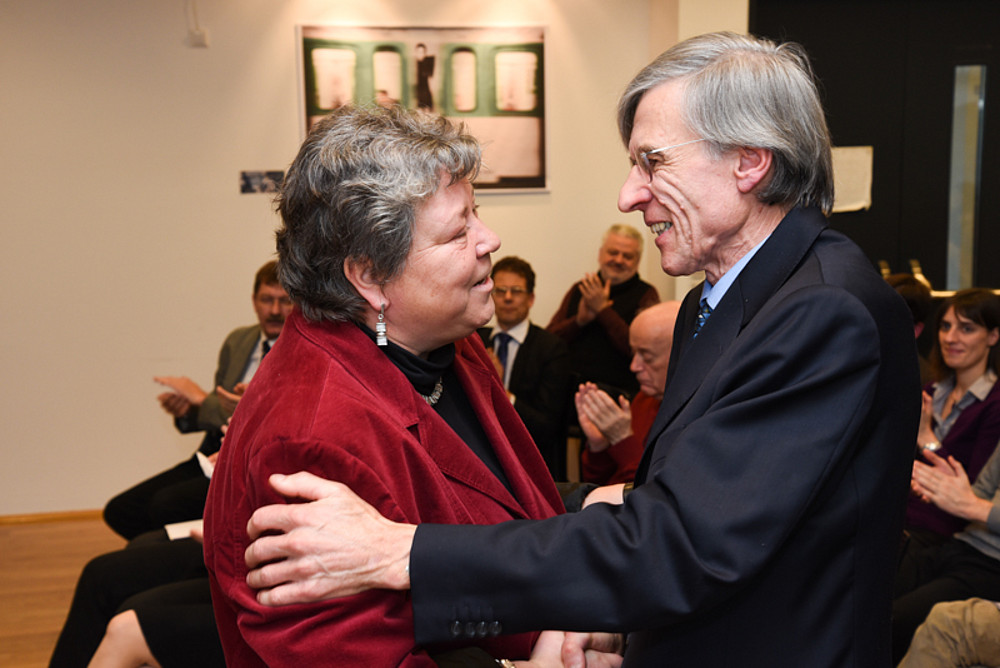
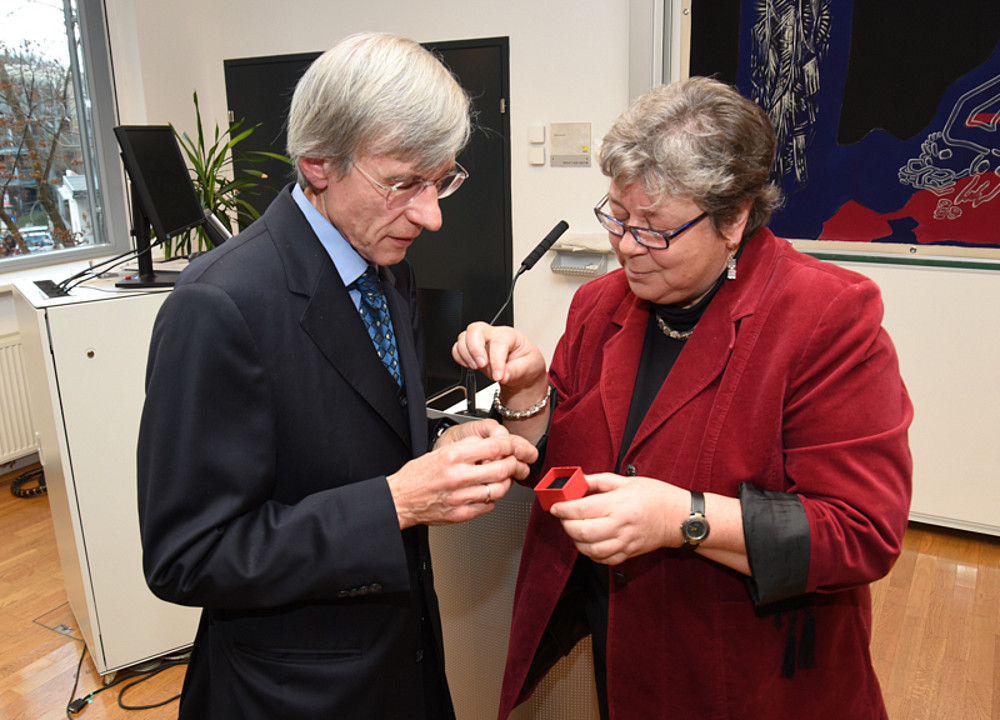
Ulrike Bechmann ließ sich was ganz besonderes einfallen und überreichte Besonderheiten aus Isfahan (Iran) an Karl Prenner

Ulrike Bechmann ließ sich was ganz besonderes einfallen und überreichte Besonderheiten aus Isfahan (Iran) an Karl Prenner

Ein kleines Siegel und einen Geschäftsbrief aus dem 19. Jahrhundert

Ein kleines Siegel und einen Geschäftsbrief aus dem 19. Jahrhundert

Der Islamexperte Karl Prenner wechselte in den Ruhestand. Ein Symposium ehrte seine Person und seine wissenschaftliche Arbeit

Karl Prenner sei ein vebindlicher Mensch. Kaum ein/e FestrednerIn ließ diese sachliche Personenbeschreibung des Islamwissenschafters, der nach 38 Jahren an der Universität Graz in den wohlverdienten Ruhestand trat, aus. FreundInnen, KollegInnen, Familie, Studierende und ehemelige Studierende waren am 2. Dezember 2016 an die Universität Graz gekommen, um Ao.Univ.-Prof. Dr. Karl Prenner mit einem würdigen Symposium, das unter dem Titel "Die spirituellen Quellen des Islams" stand, nochmals hochleben zu lassen.

"Karl Prenner hat viel zur Versachlichung der Debatte Islam beigetragen", sagte etwa der Dekan der Katholisch-Theologischen Fakultät, Univ.-Prof. Dr. Reinhold Esterbauer, der den FestrednerInnen-Reigen eröffnete. "Die Ereignisse vom 11. September 2001 waren ein Schnitt in seiner wissenschaftlichen Tätigkeit als Islamkenner." Stellvertretend für den steirischen Bischof Wilhelm Krautwaschl trat Dompfarrer Prälat Dr. Heinrich Schnuderl ans Pult und überbrachte Grüße des Bischofs. Forschungsvizerektor Peter Scherrer vertrat das Rektorat der Universität. Gemeinderätin Elisabeth Potzinger war die Vertreterin der Stadt Graz.

Univ.-Prof. Dr. Ulrike Bechmann, die als Leiterin des Instituts für Religionswissenschaften auch Organisatorin des Festes war, würdigte Prenner in hohem Maße - persönliche Worte, persönliche Gedanken und ein Rückblick auf sein erfolgreiches Leben. Bechmann überreichte dem "Brückenbauer zum Islam" abschließend ein altes, kleines Siegel und einen Geschäftsbrief vom 17. August 1881 aus Isfahan (Iran) als Erinnerung an seine aktive Zeit an der Universität Graz.

created by Konstantinos Tzivanopoulos

Related news

Jurassic Sounds: Biologist reconstructs insect songs from 165 million years ago

It was apparently not just the roars of the dinosaurs that made up the soundscape of the animal world during the Jurassic period. Crickets and grasshoppers communicated through a variety of songs and high-pitched sounds, as Thorin Jonsson from the Institute of Biology at the University of Graz discovered together with colleagues from the universities of Lincoln, Bristol (UK), Beijing (China) and Tempe (USA). The findings on what are so far the oldest traces of sound on Earth have just been published in the journal PNAS.

EU funding boosts international exchange between universities

The University of Graz is further expanding its international study opportunities through the European university alliance Arqus and is taking the lead in two key projects. In future, students will benefit from even more joint degree programmes and from simplified recognition of academic achievements through the Joint European Degree Label.

Rescue and risks: Researchers have surveyed public perceptions of AI

The use of artificial intelligence has had to be made transparent since 2 August 2026. The EU’s AI Act, which has been in force since then, also sets out how risky an application is and which security measures apply as a result. However, the assessment of risks by the legislation differs in some cases significantly from the perceptions of the Austrian public. This is the finding of a representative study carried out by data scientist Stefan Thalmann from the University of Graz and his team.

The Healing Sea: Researchers discover new approaches to treating chronic inflammation in sponges

Chronic inflammation plays a key role in many diseases, ranging from metabolic disorders and cardiovascular diseases to tissue damage following injuries or infections. “Normally, the body is able to resolve inflammation on its own. If this process becomes unbalanced, immune cells remain permanently active and continue to drive negative changes in the tissue,” explains Andreas Koeberle, a pharmacist at the University of Graz.

Begin of page section:
Additional information:

University of Graz
Universitaetsplatz 3
8010 Graz
Austria
  • Contact
  • Web Editors
  • Moodle
  • UNIGRAZonline
  • Imprint
  • Data Protection Declaration
  • Accessibility Declaration
Weatherstation
Uni Graz

End of this page section. Go to overview of page sections

End of this page section. Go to overview of page sections

Begin of page section:

End of this page section. Go to overview of page sections