




Begin of page section:
Page sections:

  • Go to contents (Accesskey 1)
  • Go to position marker (Accesskey 2)
  • Go to main navigation (Accesskey 3)
  • Go to sub navigation (Accesskey 4)
  • Go to additional information (Accesskey 5)
  • Go to page settings (user/language) (Accesskey 8)
  • Go to search (Accesskey 9)

End of this page section. Go to overview of page sections

Begin of page section:
Page settings:

English en
Deutsch de
Search
Login

End of this page section. Go to overview of page sections

Begin of page section:
Search:

Search for details about Uni Graz
Close

End of this page section. Go to overview of page sections


Search

Begin of page section:
Main navigation:

Page navigation:

  • University

    University
    • About the University
    • Organisation
    • Faculties
    • Library
    • Working at University of Graz
    • Campus
    Developing solutions for the world of tomorrow - that is our mission. Our students and our researchers take on the great challenges of society and carry the knowledge out.
  • Research Profile

    Research Profile
    • Our Expertise
    • Research Questions
    • Research Portal
    • Promoting Research
    • Research Transfer
    • Ethics in Research
    • Commission for Scientific Integrity
    Scientific excellence and the courage to break new ground. Research at the University of Graz creates the foundations for making the future worth living.
  • Studies

    Studies
    • Prospective Students
    • Students
  • Community

    Community
    • International
    • Location
    • Research and Business
    • Alumni
    The University of Graz is a hub for international research and brings together scientists and business experts. Moreover, it fosters the exchange and cooperation in study and teaching.
  • Spotlight
Topics
  • Sustainable University
  • Researchers answer
  • Work for us
Close menu

End of this page section. Go to overview of page sections

Begin of page section:
You are here:

University of Graz News Die Welt entdecken

End of this page section. Go to overview of page sections

Monday, 12 October 2020

Die Welt entdecken

Thomas Pölzler, Laura Garcia Portella, Christoph Hofstätter und Sarah Mercer (im Uhrzeigersinn von links oben) waren von ihren Erasmus+ Auslandsaufenthalten begeistert. Fotos: privat.

Thomas Pölzler, Laura Garcia Portella, Christoph Hofstätter und Sarah Mercer (im Uhrzeigersinn von links oben) waren von ihren Erasmus+ Auslandsaufenthalten begeistert. Fotos: privat.

Diese Woche steht im Zeichen von Erasmus+- Heute im Fokus: Personalmobilität

Mit der Erasmus+ Bedienstetenmobilität haben alle MitarbeiterInnen der Universität Graz zahlreiche Länder und Partnereinrichtungen weltweit zur Auswahl. Die Mobilität bietet ihnen die Möglichkeit, neue Kompetenzen und Expertise zu erwerben, die Internationalisierung der Universität und ihrer Mitarbeiterinnen zu fördern und eine bessere Vernetzung mit Partneruniversitäten zu schaffen. Das Erasmus+ Programm bietet zwei Mobilitätsarten für Bedienstete an:

Erasmus+ Staff Training:

•    Möglich für alle MitarbeiterInnen mit aktivem Dienstverhältnis
•    Aufenthalte ab zwei Tagen bis zwei Monaten
•    Trainings, fachspezifische Kurse, Workshops, Praktika, Job-Shadowing & Know-How Transfer

Erasmus+ Lehraufenthalte:
•    Möglich für alle Lehrenden mit aktivem Dienstverhältnis
•    Aufenthalte ab zwei Tagen bis zwei Monate
•    Lehrumfang von mindestens acht Stunden/Woche

Nach erfolgreicher Bewerbung wird die Bedienstetenmobilität finanziell bezuschusst.
>Weitere Informationen


Mobil sein: das sagen TeilnehmerInnen dazu

Erfahrungen aus erster Hand sind hilfreich, um sich mit dem Thema Mobilität besser auseinanderzusetzen zu können. Daher haben wir einige TeilnehmerInnen darum gebeten, uns ein kleines Resümee zukommen zu lassen.


Thomas Pölzler: Pontifical Catholic University of Rio de Janeiro
„Der Austausch an der PUCi (wie die Universität von den Einheimischen genannt wird) war eine großartige Erfahrung. Ich unterrichtete zusammen mit meinem Gastgeber ein Seminar, das meinen Horizont sowohl in puncto Inhalt als auch hinsichtlich der verwendeten Lehrmethoden erweiterte. Ebenso gab es viele Möglichkeiten, mich mit KollegInnen über mein Forschungsgebiet auszutauschen, neue Freundschaften zu bilden und mehr über Brasilien zu lernen. Mit meinem Gastgeber werde ich auch bald in einem gemeinsamen Forschungsprojekt zusammenarbeiten.“


Laura Garcia Portella: Universitat de Barcelona:
"My stay in Barcelona was incredibly productive. I taught in a seminar on political philosophy and introduced the topic of climate ethics, and the students were very engaged with the subject matter. I had a close look at alternative possibilities to develop a political philosophy syllabus, which enriched and broadened my view on the discipline. My host and I now explore the possibility of collaborating in the near future, together with other colleagues in the Department of Philosophy at the UB."

Sarah Mercer: University of Bergen
"The Erasmus+ exchange with Bergen was a fantastic opportunity to connect deeply and personally with colleagues and students there. It has been instrumental in helping us establish a set of cooperation projects at the doctoral level also within the Arqus programme as well as furthering academic research projects together including a specific agenda of research due to commence this autumn. Looking ahead, we plan further exchanges between staff and students to ensure we continue to learn from each other and broaden our intellectual and cultural horizons."


Christoph Hofstätter: University of Sarajevo
„Für die Möglichkeit, in Sarajevo im Rahmen des Erasmus+-Programms unterrichten zu dürfen, bin ich immer noch sehr dankbar. Neben dem fachlichen Austausch mit den KollegInnen und dem Kontakt mit den dortigen Studierenden war vor allem auch das Eintauchen in die bosnische Geschichte und Kultur äußerst bereichernd.“
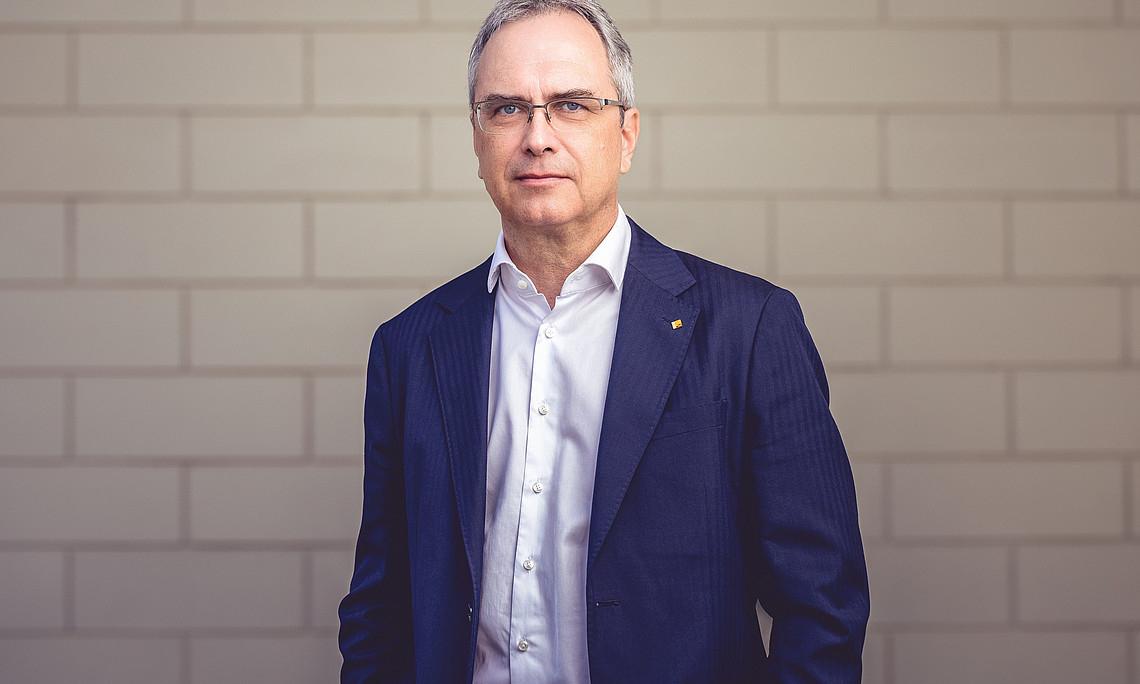

created by Gerhild Leljak & Gunnar Knaus

Related news

Higher Education Strategy 2040: Austria’s universities on course for the future

Austria has 77 higher education institutions, which is above the EU average – but does this really make sense? The new Higher Education Strategy 2040 focuses on cooperation rather than mergers. As one of the six largest universities in Austria, the University of Graz plays a central role in this.

Climate research in Greenland: Old data provides new insights

The polar explorer and University of Graz professor Alfred Wegener left behind a unique collection of climate data from Greenland. A research team from the University of Graz is now analysing this 100-year-old treasure trove of data and comparing it with current measurements.

Diversity in nature and science: How we talk about plants and each other

Ginkgo, kiwi, hemp: they exist as male and female plants. Anyone who paid attention in biology class will confirm this. But is this categorisation, established by Carl von Linné almost 300 years ago, still valid today? An interdisciplinary team at the University of Graz is questioning these attributions and using this as a starting point to provide food for thought for gender-sensitive interaction between students, scientific and teaching staff.

Around the world in eight stops: the Long Night of Research at the University of Graz

On 24 April from 5 pm, you can take a short trip around the globe at the University of Graz, discovering pecularities of foreign countries or new local features in the entrance hall of the University Library. The itinerary takes you through introduced animal species, political attitudes and the omnipotence of algorithms. There will also be a programme in the historic reading hall, as well as at the UniGraz@Museum and the University Archive.

Begin of page section:
Additional information:

University of Graz
Universitaetsplatz 3
8010 Graz
Austria
  • Contact
  • Web Editors
  • Moodle
  • UNIGRAZonline
  • Imprint
  • Data Protection Declaration
  • Accessibility Declaration
Weatherstation
Uni Graz

End of this page section. Go to overview of page sections

End of this page section. Go to overview of page sections

Begin of page section:

End of this page section. Go to overview of page sections

