



Begin of page section:
Page sections:

  • Go to contents (Accesskey 1)
  • Go to position marker (Accesskey 2)
  • Go to main navigation (Accesskey 3)
  • Go to sub navigation (Accesskey 4)
  • Go to additional information (Accesskey 5)
  • Go to page settings (user/language) (Accesskey 8)
  • Go to search (Accesskey 9)

End of this page section. Go to overview of page sections

Begin of page section:
Page settings:

English en
Deutsch de
Search
Login

End of this page section. Go to overview of page sections

Begin of page section:
Search:

Search for details about Uni Graz
Close

End of this page section. Go to overview of page sections


Search

Begin of page section:
Main navigation:

Page navigation:

  • University

    University
    • About the University
    • Organisation
    • Faculties
    • Library
    • Working at University of Graz
    • Campus
    Developing solutions for the world of tomorrow - that is our mission. Our students and our researchers take on the great challenges of society and carry the knowledge out.
  • Research Profile

    Research Profile
    • Our Expertise
    • Research Questions
    • Research Portal
    • Promoting Research
    • Research Transfer
    • Ethics in Research
    • Commission for Scientific Integrity
    Scientific excellence and the courage to break new ground. Research at the University of Graz creates the foundations for making the future worth living.
  • Studies

    Studies
    • Prospective Students
    • Students
    • Welcome Weeks for First Year Students
  • Community

    Community
    • International
    • Location
    • Research and Business
    • Alumni
    The University of Graz is a hub for international research and brings together scientists and business experts. Moreover, it fosters the exchange and cooperation in study and teaching.
Topics
  • Sustainable University
  • Researchers answer
  • Work for us
Close menu

End of this page section. Go to overview of page sections

Begin of page section:
You are here:

University of Graz News Die Uni immer dabei

End of this page section. Go to overview of page sections

Wednesday, 11 May 2016

Die Uni immer dabei

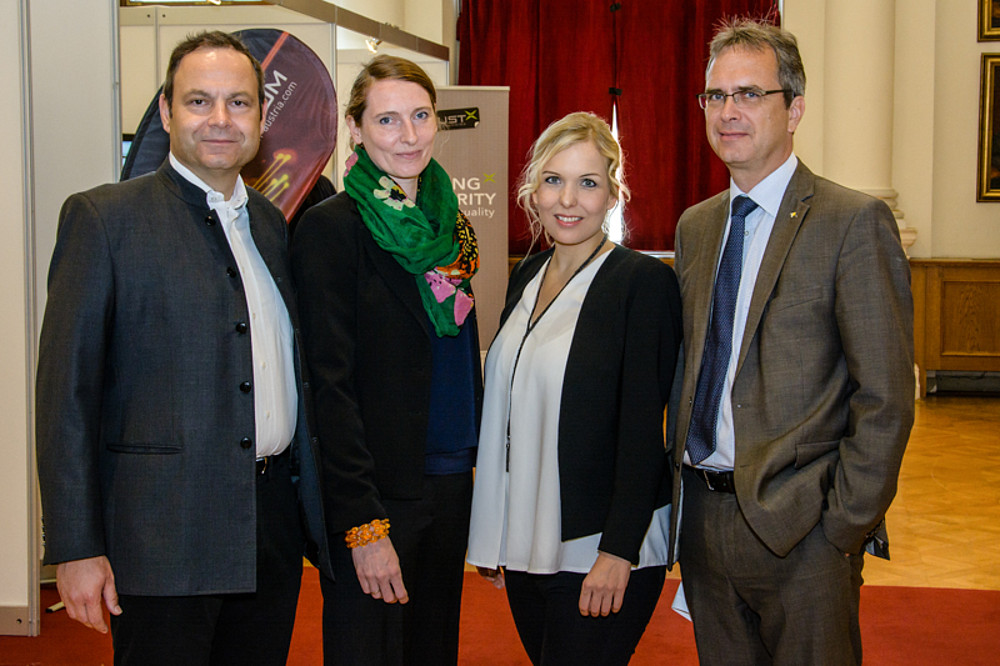
Schauen die digitale Zukunft: Christian Marzluf, Moderatorin Silvia Rainer, Keynote-Speakerin Alexandra Grohmann und Vizerektor Peter Riedler (vl.l.) Fotos: Un Graz/Michaela Fetz ©Uni Graz/Fetz
©Uni Graz/Fetz

Schauen die digitale Zukunft: Christian Marzluf, Moderatorin Silvia Rainer, Keynote-Speakerin Alexandra Grohmann und Vizerektor Peter Riedler (vl.l.) Fotos: Un Graz/Michaela Fetz

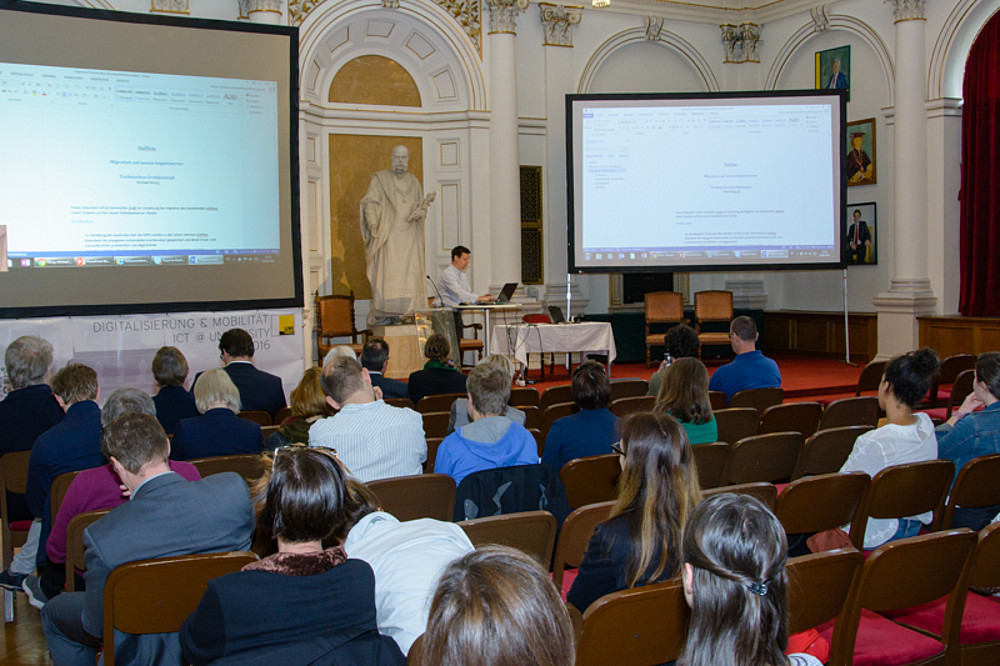
Die ICT fand in der Aula statt ©Uni Graz/Fetz
©Uni Graz/Fetz

Die ICT fand in der Aula statt

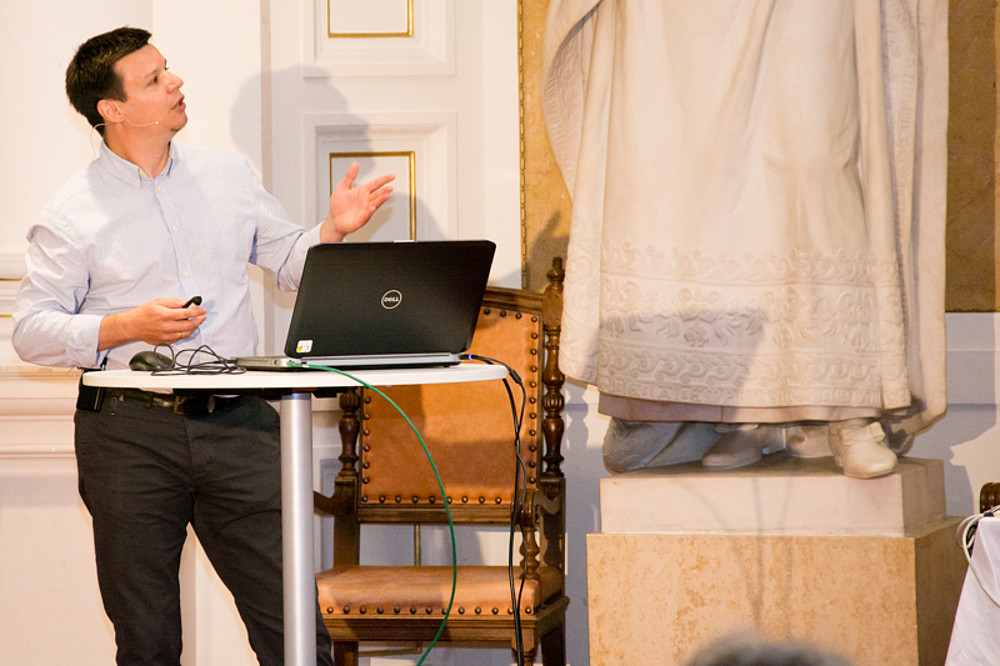
Sharepoint-Experte Michael Hirczy präsentierte die neuen Office Web Apps. ©Uni Graz/Fetz
©Uni Graz/Fetz

Sharepoint-Experte Michael Hirczy präsentierte die neuen Office Web Apps.

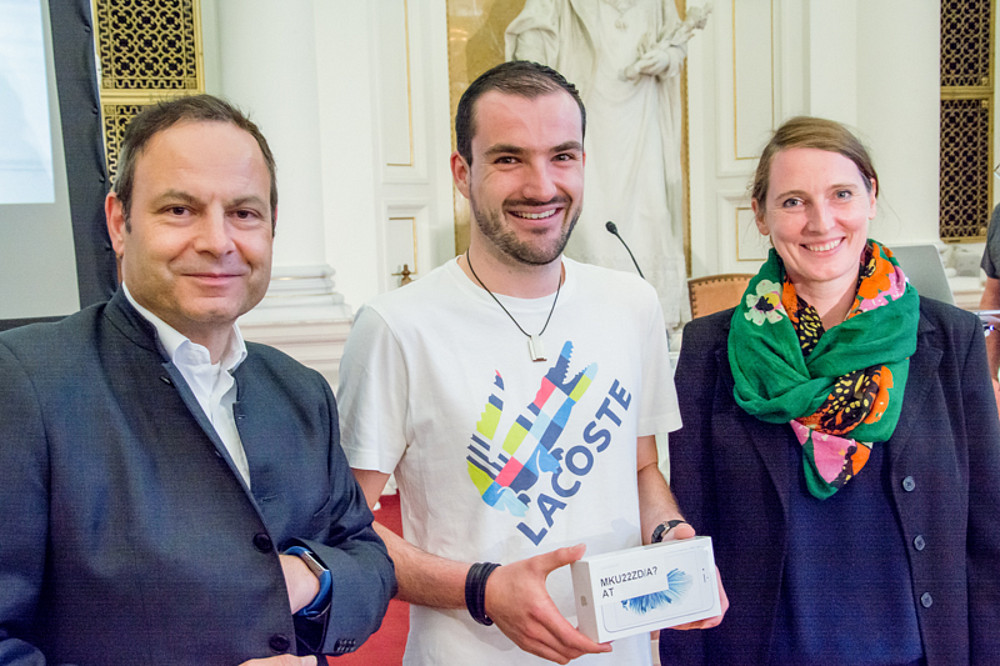
Unter allen anwesenden App-UserInnen wurden zwei Smartphones verlost: Christoph Fuchs und ©Uni Graz/Fetz
©Uni Graz/Fetz

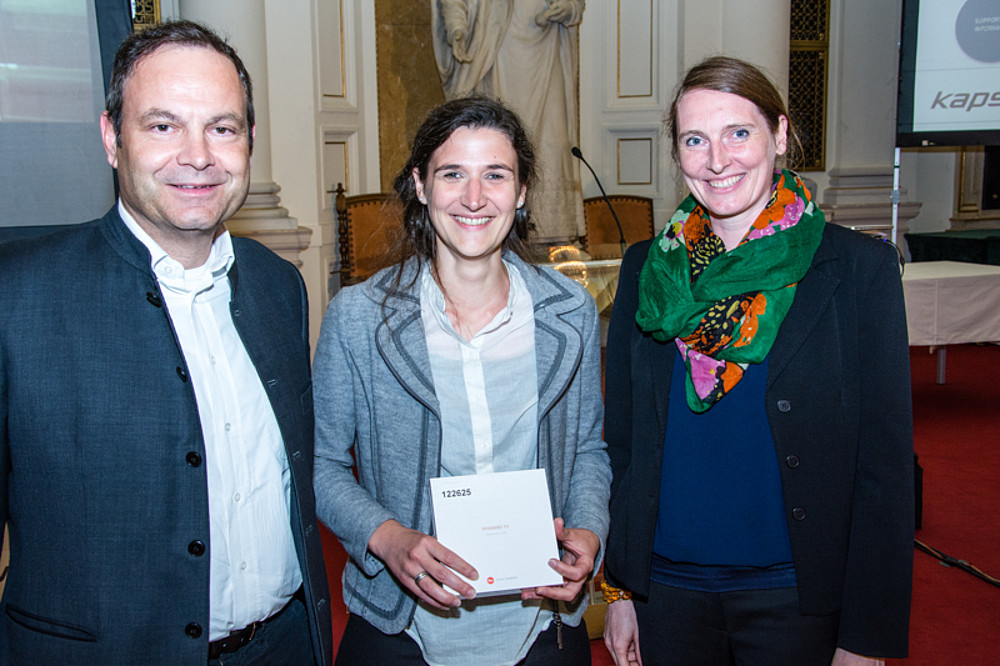
Unter allen anwesenden App-UserInnen wurden zwei Smartphones verlost: Christoph Fuchs gewann ein iphone 6s.

Claudia Duzik von UNI for Life darf ein Huawei P9 ihr Eigen nennen. ©Uni Graz/Fetz
©Uni Graz/Fetz

Claudia Duzik von UNI for Life darf ein Huawei P9 ihr Eigen nennen.

Und das rund um die Uhr: Die Uni-Graz-App wurde aus der Taufe gehoben. Jetzt downloaden.

Der 10. Mai war ein großer Tag für die Universität Graz. Wurde doch gestern die erste Uni-Graz-App im Rahmen der IT-Tagung "ICT@UNIVERSITY" aus der Taufe gehoben. Das praktische Programmchen für iOS- und Android-Smartphones wurde größtenteils im Haus von der UNI-IT programmiert und ist vor allem für Studierende ein Gewinn: der persönliche Lehrveranstaltungskalender, der eingebaute Campusplan, Veranstaltungen am Campus, der Uni-Graz-Blog und noch vieles mehr helfen im Studienalltag. Am ersten Tag haben bereits 1000 Personen die App über http://apps.uni-graz.at/ios und http://apps.uni-graz.at/android aufs Handy geladen.


Keynotes

Vor drei Jahren wurde die Veranstaltung ICT@UNIVERSITY ins Leben gerufen; die Tagung richtet sich speziell an ein Hochschul-Publikum und präsentiert einmal im Jahr Trends und Innovationen aus der IT-Branche, die sich gut in universitäre Strukturen eingliedern lassen. Höhepunkte waren in diesem Jahr Keynotes passend zum Generalthema "Digitalisierung und Mobilität": Alexandra Grohmann entführte das Publikum in die Welt von 2025 und ließ es teilhaben an virtueller Realität und Skype-Gesprächen mit Übersetzungs-Funktion. Michael Kopp, Leiter der Akademie für Neue Medien und Wissenstransfer, gab Einblick in die Lehre mit digitalen Medien. Den Abschluss bildete das kurze Kabarett-Programm "Einer wird den Stecker ziehen" von Thomas Sulak.

Service, Service, Service: Für MitarbeiterInnen und Studierende

"Wir möchten mit unseren neuen Features Studierende und MitarbeiterInnen bei ihrem Studium und ihrer Arbeit unterstützen", sagte UNI-IT-Leiter Mag. Christian Marzluf, MSc. "Und so können alle BesucherInnen heute etwas mit in den Hörsaal und ins Büro nehmen." Vizerektor Peter Riedler betonte die Bedeutung solcher Veranstaltungen für den steirischen Hochschulraum, dem neun Bildungsinstitutionen angehören.

Die App & Office Web Apps
Neben der Smartphone-App, die der Entwickler Dieter Schäfer vorstellte, fiel an diesem Tag auch der Startschuss der Office Web Apps, die vor allem Sharepoint-UserInnen an der Uni Graz Hilfe im Arbeitsalltag bieten soll. So ist es beispielsweise nicht mehr zwingend notwendig Dokumente, Excel-Tabellen und Präsnetationen über installierte Office-Programme zu öffnen, sondern einfach per Mausklick über den Office Web App-Server der Universität Graz. Auch bot sich die Möglichkeit bei FirmenparnterInnen, die ihre Produkte vorstellten, über Neuigkeiten aus der IT-Welt zu informieren.

Wünschen und Voten
Alle NutzerInnen der Uni-Graz-App können über die Funktion "Neuen Feature Request" Anregungen für neue Funktionen der App einreichen. So bleibt das Programm immer topaktuell und auf die Bedürfnisse der UserInnen zugeschnitten. Über einen Abstimmungsprozess werden dann die Top-Features ermittelt und bei den Updates der App eingespielt. "Wir möchten zwei Mal pro Jahr, zu Semesterbeginn, ein Update anbieten", weiß Dieter Schäfer.


created by Konstantinos Tzivanopoulos

Related news

Jurassic Sounds: Biologist reconstructs insect songs from 165 million years ago

It was apparently not just the roars of the dinosaurs that made up the soundscape of the animal world during the Jurassic period. Crickets and grasshoppers communicated through a variety of songs and high-pitched sounds, as Thorin Jonsson from the Institute of Biology at the University of Graz discovered together with colleagues from the universities of Lincoln, Bristol (UK), Beijing (China) and Tempe (USA). The findings on what are so far the oldest traces of sound on Earth have just been published in the journal PNAS.

EU funding boosts international exchange between universities

The University of Graz is further expanding its international study opportunities through the European university alliance Arqus and is taking the lead in two key projects. In future, students will benefit from even more joint degree programmes and from simplified recognition of academic achievements through the Joint European Degree Label.

Rescue and risks: Researchers have surveyed public perceptions of AI

The use of artificial intelligence has had to be made transparent since 2 August 2026. The EU’s AI Act, which has been in force since then, also sets out how risky an application is and which security measures apply as a result. However, the assessment of risks by the legislation differs in some cases significantly from the perceptions of the Austrian public. This is the finding of a representative study carried out by data scientist Stefan Thalmann from the University of Graz and his team.

The Healing Sea: Researchers discover new approaches to treating chronic inflammation in sponges

Chronic inflammation plays a key role in many diseases, ranging from metabolic disorders and cardiovascular diseases to tissue damage following injuries or infections. “Normally, the body is able to resolve inflammation on its own. If this process becomes unbalanced, immune cells remain permanently active and continue to drive negative changes in the tissue,” explains Andreas Koeberle, a pharmacist at the University of Graz.

Begin of page section:
Additional information:

University of Graz
Universitaetsplatz 3
8010 Graz
Austria
  • Contact
  • Web Editors
  • Moodle
  • UNIGRAZonline
  • Imprint
  • Data Protection Declaration
  • Accessibility Declaration
Weatherstation
Uni Graz

End of this page section. Go to overview of page sections

End of this page section. Go to overview of page sections

Begin of page section:

End of this page section. Go to overview of page sections