Begin of page section:
Page sections:

  • Go to contents (Accesskey 1)
  • Go to position marker (Accesskey 2)
  • Go to main navigation (Accesskey 3)
  • Go to sub navigation (Accesskey 4)
  • Go to additional information (Accesskey 5)
  • Go to page settings (user/language) (Accesskey 8)
  • Go to search (Accesskey 9)

End of this page section. Go to overview of page sections

Begin of page section:
Page settings:

English en
Deutsch de
Search
Login

End of this page section. Go to overview of page sections

Begin of page section:
Search:

Search for details about Uni Graz
Close

End of this page section. Go to overview of page sections


Search

Begin of page section:
Main navigation:

Page navigation:

  • University

    University
    • About the University
    • Organisation
    • Faculties
    • Library
    • Working at University of Graz
    • Campus
    Developing solutions for the world of tomorrow - that is our mission. Our students and our researchers take on the great challenges of society and carry the knowledge out.
  • Research Profile

    Research Profile
    • Our Expertise
    • Research Questions
    • Research Portal
    • Promoting Research
    • Research Transfer
    • Ethics in Research
    • Commission for Scientific Integrity
    Scientific excellence and the courage to break new ground. Research at the University of Graz creates the foundations for making the future worth living.
  • Studies

    Studies
    • Prospective Students
    • Students
    • Registration for Study Programme (Winter semester 2026/27)
    • Study Days 22-26 June 2026
  • Community

    Community
    • International
    • Location
    • Research and Business
    • Alumni
    The University of Graz is a hub for international research and brings together scientists and business experts. Moreover, it fosters the exchange and cooperation in study and teaching.
Topics
  • Sustainable University
  • Researchers answer
  • Work for us
Close menu

End of this page section. Go to overview of page sections

Begin of page section:
You are here:

University of Graz News Die Hefe war’s

End of this page section. Go to overview of page sections

Thursday, 21 July 2016

Die Hefe war’s

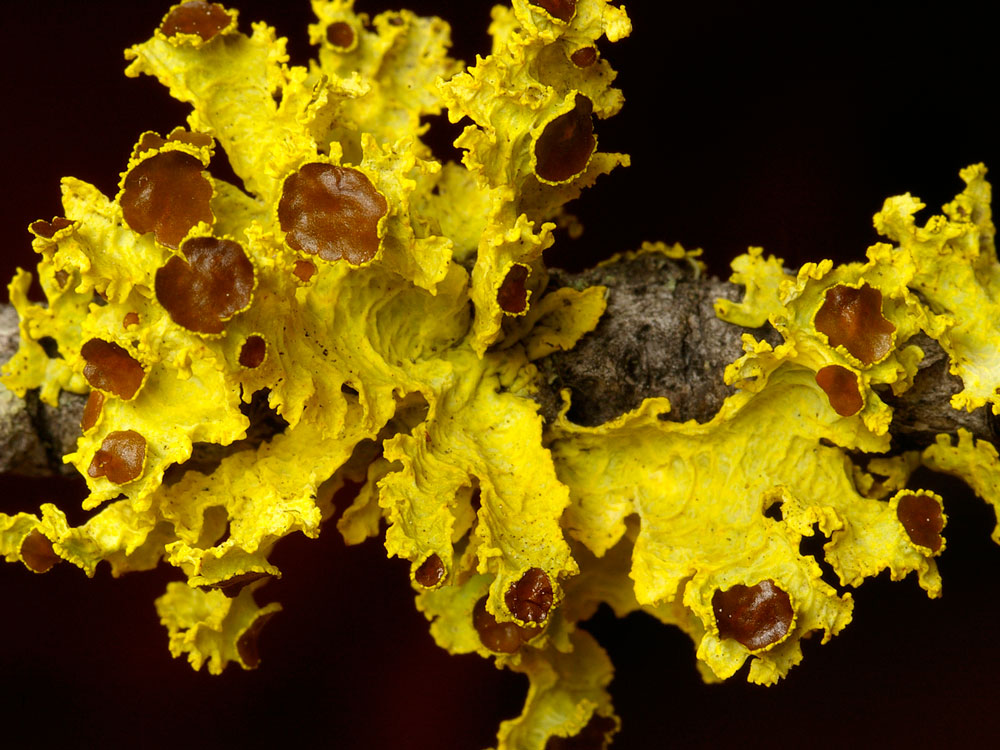
Die Flechte Vulpicida canadensis wächst auf Baumrinden in Nordamerika. Wie WissenschafterInnen nun herausfanden, besteht sich aus einer Alge und zwei Pilzen. Foto: Tim Wheeler/timwheelerphotography.com

Die Flechte Vulpicida canadensis wächst auf Baumrinden in Nordamerika. Wie WissenschafterInnen nun herausfanden, besteht sich aus einer Alge und zwei Pilzen. Foto: Tim Wheeler/timwheelerphotography.com

ForscherInnen der Universität Graz entdecken neuen Partner bei Flechten

Flechten sind eine Symbiose einer Alge mit einem Pilz – von dieser wissenschaftlichen Erkenntnis ging man die letzten 150 Jahre lang aus. Nun müssen die Lehrbücher umgeschrieben werden: WissenschafterInnen der Uni Graz fanden im Team mit KollegInnen aus den USA und Schweden heraus, dass einige der häufigsten Flechtenarten der Welt einen weiteren Partner im Bunde haben, nämlich einen Hefepilz. Diese Erkenntnisse werden am 29. Juli 2016 als Titelgeschichte im renommierten Fachmagazin Science veröffentlicht.

Dank neuer Methoden zur Gen-Analyse entdeckte das Team um Dr. Toby Spribille, der sowohl am Institut für Pflanzenwissenschaften der Universität Graz in der Arbeitsgruppe von Univ.-Prof. Dr. Helmut Mayrhofer als auch an der University of Montana in den USA tätig ist, den bislang unbekannten Pilz, der als Hefe identifiziert wurde. Spribille wollte herausfinden, warum von zwei eng verwandten und in Montana weit verbreiteten Flechten eine für Säugetiere giftig ist, die andere nicht. Nachdem er bei einer genauen Analyse der DNA auf die Hefe gestoßen war, begann er mit seinem Team systematisch Flechten aus der ganzen Welt zu untersuchen. Tatsächlich fand sich der zweite Pilz in häufig auftretenden Arten von der Antarktis bis Japan, von Südamerika bis ins Äthiopische Hochland.
„Die Erkenntnis erschüttert unser grundlegendes Wissen über Flechten. Wir müssen von Neuem untersuchen, wie diese Lebewesen entstehen und wer welche Funktionen in der Gemeinschaft übernimmt“, erklärt der Evolutionsbiologe die fundamentale Bedeutung der Entdeckung.
Die WissenschafterInnen konnten nun auch ein bislang rätselhaftes Phänomen erklären: Bestimmte Flechten, die man für identisch hielt, sehen unterschiedlich aus und setzen verschiedene chemische Stoffe frei, die nun auf ihre pharmazeutische Wirkung geprüft werden. „Alle Zeichen deuten darauf hin, dass der zweite Pilz dabei eine Rolle spielt, da er in der einen Art zum größeren Teil vertreten ist als in der anderen“, schildert Spribille.

Das Institut für Pflanzenwissenschaften der Karl-Franzens-Universität ist ein weltweit führendes Zentrum der Flechtenforschung. Die Analysen in diesem Projekt wurden gemeinsam mit dem Institut für Molekulare Biowissenschaften durchgeführt und vom österreichischen Wissenschaftsfonds FWF gefördert.

Publikation:
Toby Spribille, Veera Tuovinen, Philipp Resl, Dan Vanderpool, Heimo Wolinski, M. Catherine Aime, Kevin Schneider, Edith Stabentheiner, Merje Toome-Heller, Göran Thor, Helmut Mayrhofer, Hanna Johannesson, John P. McCutcheon: „Basidiomycete yeasts in the cortex of ascomycete macrolichens“
Science, online am 22. Juli 2016, Printausgabe am 29. Juli 2016

created by Dagmar Eklaude

Related news

Full effort in the heat: the Sports Centre was in full swing at the Kleeblattlauf

On 19 June 2026, 2,000 runners and hundreds of supporters made their way to the Rosenhain for a sporting end-of-term event.

Save, invest or guarantee: What Austrians expect from the state

Austria needs to make savings. But where? And what should the Republic actually be spending its money on? The answers are provided by the initial findings of a major study involving the University of Graz. 99 per cent of those surveyed are in favour of the state ensuring healthcare provision. Almost three-quarters would like to see more public funding for education, whilst only around three per cent are in favour of cuts in this sector.

Science meets blockbuster: Campus cinema at the University of Graz

A cinematic treat for the scientific community: the courtyard of the University of Graz’s main building is once again being transformed into an atmospheric open-air cinema this year. From 29 June to 10 July 2026 (Mondays to Fridays from 8.30 pm), blockbusters and documentaries will be shown on the open-air screen. Academics from the University of Graz will be taking a closer look at the films shown, examining them to distinguish fact from fiction.

Complying with the norm: Why Do Standards Shape Our Lives, Elisabeth Staudegger?

Standards determine whether a sheet of paper fits in a printer or whether a charging plug can power multiple devices. These standards shape our everyday lives. But who actually sets these standards? Where are the weaknesses, and how could science help to improve them? Elisabeth Staudegger, Head of the ‘Law and IT’ Department at the Institute for Legal Foundations at the University of Graz, host the Academic Standards Day on 16 June. Here she relays how sciences can contribute to the topic of standardisation and reveals her personal favourite standard.

Begin of page section:
Additional information:

University of Graz
Universitaetsplatz 3
8010 Graz
Austria
  • Contact
  • Web Editors
  • Moodle
  • UNIGRAZonline
  • Imprint
  • Data Protection Declaration
  • Accessibility Declaration
Weatherstation
Uni Graz

End of this page section. Go to overview of page sections

End of this page section. Go to overview of page sections

Begin of page section:

End of this page section. Go to overview of page sections