



Begin of page section:
Page sections:

  • Go to contents (Accesskey 1)
  • Go to position marker (Accesskey 2)
  • Go to main navigation (Accesskey 3)
  • Go to sub navigation (Accesskey 4)
  • Go to additional information (Accesskey 5)
  • Go to page settings (user/language) (Accesskey 8)
  • Go to search (Accesskey 9)

End of this page section. Go to overview of page sections

Begin of page section:
Page settings:

English en
Deutsch de
Search
Login

End of this page section. Go to overview of page sections

Begin of page section:
Search:

Search for details about Uni Graz
Close

End of this page section. Go to overview of page sections


Search

Begin of page section:
Main navigation:

Page navigation:

  • University

    University
    • About the University
    • Organisation
    • Faculties
    • Library
    • Working at University of Graz
    • Campus
    Developing solutions for the world of tomorrow - that is our mission. Our students and our researchers take on the great challenges of society and carry the knowledge out.
  • Research Profile

    Research Profile
    • Our Expertise
    • Research Questions
    • Research Portal
    • Promoting Research
    • Research Transfer
    • Ethics in Research
    • Commission for Scientific Integrity
    Scientific excellence and the courage to break new ground. Research at the University of Graz creates the foundations for making the future worth living.
  • Studies

    Studies
    • Prospective Students
    • Students
    • Registration for Study Programme (Winter semester 2026/27)
    • Study Days 22-26 June 2026
  • Community

    Community
    • International
    • Location
    • Research and Business
    • Alumni
    The University of Graz is a hub for international research and brings together scientists and business experts. Moreover, it fosters the exchange and cooperation in study and teaching.
Topics
  • Sustainable University
  • Researchers answer
  • Work for us
Close menu

End of this page section. Go to overview of page sections

Begin of page section:
You are here:

University of Graz News Brunettis Nachbar

End of this page section. Go to overview of page sections

Tuesday, 31 January 2017

Brunettis Nachbar
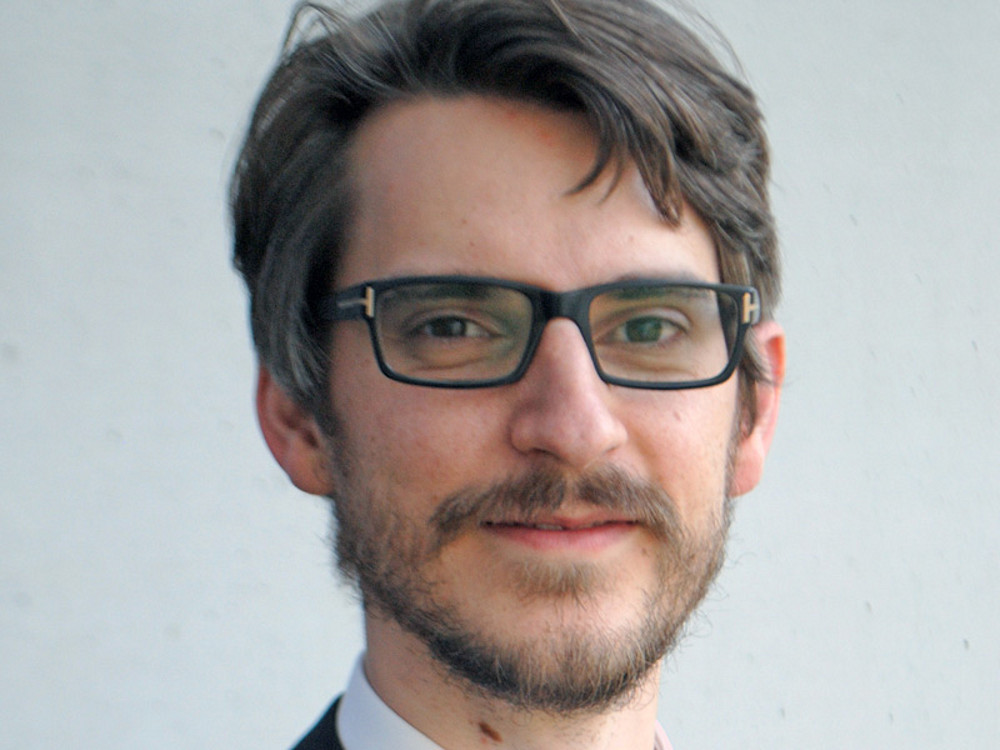
Faszination für das finstere Zeitalter: Romedio Schmitz-Esser ist Professor für die Geschichte des Mittelalters. Foto: KK

Faszination für das finstere Zeitalter: Romedio Schmitz-Esser ist Professor für die Geschichte des Mittelalters. Foto: KK

Romedio Schmitz-Esser ist neuer Professor für mittelalterliche Geschichte

Sein Erfolg geht über Leichen – so wie der des fiktiven Commissario Brunetti: Romedio Schmitz-Esser, von September 2014 bis Dezember 2016 Leiter des Deutschen Studienzentrums in Venedig, befasste sich in seiner Habilitation mit der kulturellen Konstruktion des toten Körpers im Mittelalter. Für die Arbeit wurde er 2016 vom Verband der Historiker und Historikerinnen Deutschlands mit dem Carl-Erdmann-Preis ausgezeichnet. „Im Mittelalter beginnt die forensische und medizinische Untersuchung, bei der Verstorbene wie Objekte behandelt werden. Im Gegensatz dazu werden Heilige als vollwertige, lebendige Mitglieder der Gesellschaft angesehen“, führt Schmitz-Esser aus. Mit diesem auch heute noch bestehenden Spannungsfeld zwischen Einbalsamierung und Zerstörung und der Rolle der körperlichen Hülle befasst sich der aus Hamburg gebürtige Historiker in seiner Forschung.
Nach dem Studium in Innsbruck – Schmitz-Essers Mutter ist Tirolerin –, der Tätigkeit als Stadthistoriker in Hall und der Habilitation an der Ludwig-Maximilians-Universität München verschlägt es den Wissenschafter mit Schwerpunkt auf italienische Geschichte nach Venedig ans Deutsche Studienzentrum. Auf seinem Nachbarbalkon frühstückt der Film-Commissario Brunetti für die Dreharbeiten.
Die Nähe zu Italien, aber auch zum osteuropäischen Raum hat den Professor schließlich nach Graz gelockt. „Es freut mich, hier an einer Universität zu sein und mich wieder verstärkt der Wissenschaft zu widmen“, berichtet er. Sein erstes steirisches Projekt führt ihn aber in eine ganz andere Richtung: Schmitz-Esser befasst sich mit der Rezeption des Buddhismus im mittelalterlichen Westen. „Es gab damals so gut wie keinen direkten Austausch, aber doch markante Einflüsse etwa durch Reiseberichte“, weiß der Forscher. Wie die Kultur und das Wissen aufgenommen wurden, will er nun klären.

created by Dagmar Eklaude

Related news

Full effort in the heat: the Sports Centre was in full swing at the Kleeblattlauf

On 19 June 2026, 2,000 runners and hundreds of supporters made their way to the Rosenhain for a sporting end-of-term event.

Save, invest or guarantee: What Austrians expect from the state

Austria needs to make savings. But where? And what should the Republic actually be spending its money on? The answers are provided by the initial findings of a major study involving the University of Graz. 99 per cent of those surveyed are in favour of the state ensuring healthcare provision. Almost three-quarters would like to see more public funding for education, whilst only around three per cent are in favour of cuts in this sector.

Science meets blockbuster: Campus cinema at the University of Graz

A cinematic treat for the scientific community: the courtyard of the University of Graz’s main building is once again being transformed into an atmospheric open-air cinema this year. From 29 June to 10 July 2026 (Mondays to Fridays from 8.30 pm), blockbusters and documentaries will be shown on the open-air screen. Academics from the University of Graz will be taking a closer look at the films shown, examining them to distinguish fact from fiction.

Complying with the norm: Why Do Standards Shape Our Lives, Elisabeth Staudegger?

Standards determine whether a sheet of paper fits in a printer or whether a charging plug can power multiple devices. These standards shape our everyday lives. But who actually sets these standards? Where are the weaknesses, and how could science help to improve them? Elisabeth Staudegger, Head of the ‘Law and IT’ Department at the Institute for Legal Foundations at the University of Graz, host the Academic Standards Day on 16 June. Here she relays how sciences can contribute to the topic of standardisation and reveals her personal favourite standard.

Begin of page section:
Additional information:

University of Graz
Universitaetsplatz 3
8010 Graz
Austria
  • Contact
  • Web Editors
  • Moodle
  • UNIGRAZonline
  • Imprint
  • Data Protection Declaration
  • Accessibility Declaration
Weatherstation
Uni Graz

End of this page section. Go to overview of page sections

End of this page section. Go to overview of page sections

Begin of page section:

End of this page section. Go to overview of page sections