



Begin of page section:
Page sections:

  • Go to contents (Accesskey 1)
  • Go to position marker (Accesskey 2)
  • Go to main navigation (Accesskey 3)
  • Go to sub navigation (Accesskey 4)
  • Go to additional information (Accesskey 5)
  • Go to page settings (user/language) (Accesskey 8)
  • Go to search (Accesskey 9)

End of this page section. Go to overview of page sections

Begin of page section:
Page settings:

English en
Deutsch de
Search
Login

End of this page section. Go to overview of page sections

Begin of page section:
Search:

Search for details about Uni Graz
Close

End of this page section. Go to overview of page sections


Search

Begin of page section:
Main navigation:

Page navigation:

  • University

    University
    • About the University
    • Organisation
    • Faculties
    • Library
    • Working at University of Graz
    • Campus
    Developing solutions for the world of tomorrow - that is our mission. Our students and our researchers take on the great challenges of society and carry the knowledge out.
  • Research Profile

    Research Profile
    • Our Expertise
    • Research Questions
    • Research Portal
    • Promoting Research
    • Research Transfer
    • Ethics in Research
    • Commission for Scientific Integrity
    Scientific excellence and the courage to break new ground. Research at the University of Graz creates the foundations for making the future worth living.
  • Studies

    Studies
    • Prospective Students
    • Students
    • Registration for Study Programme (Winter semester 2026/27)
    • Study Days 22-26 June 2026
  • Community

    Community
    • International
    • Location
    • Research and Business
    • Alumni
    The University of Graz is a hub for international research and brings together scientists and business experts. Moreover, it fosters the exchange and cooperation in study and teaching.
Topics
  • Sustainable University
  • Researchers answer
  • Work for us
Close menu

End of this page section. Go to overview of page sections

Begin of page section:
You are here:

University of Graz News Am Präsentierteller

End of this page section. Go to overview of page sections

Wednesday, 30 November 2016

Am Präsentierteller

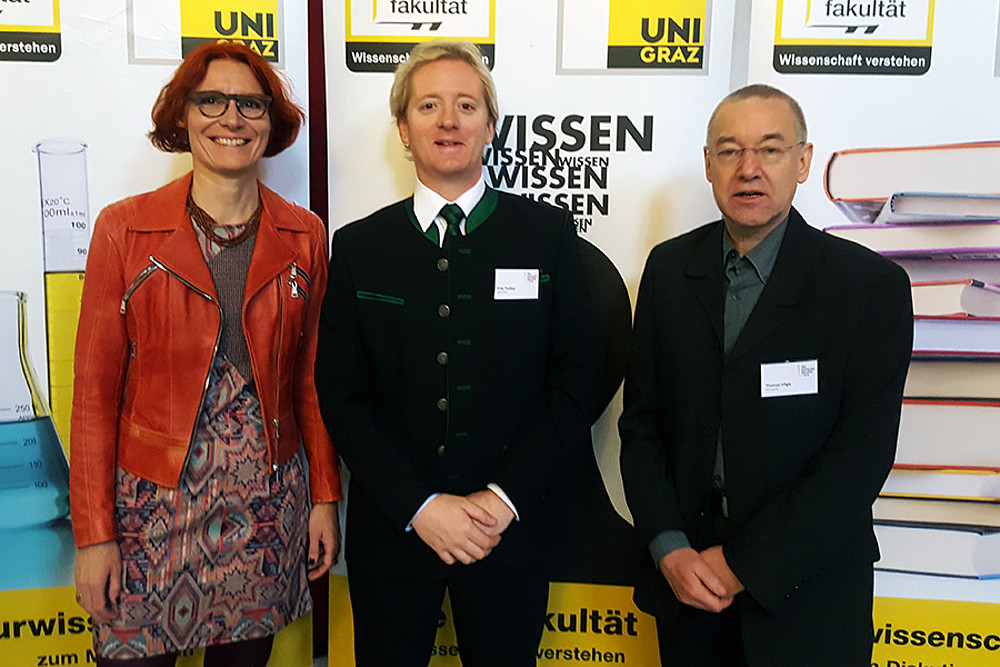
Fritz Treiber (Mitte) vom Geschmacklabor der Uni Graz konnte für die Tagung Barbara Bohle und Thomas Vilgis gewinnen. Foto: Uni Graz/Treiber

Fritz Treiber (Mitte) vom Geschmacklabor der Uni Graz konnte für die Tagung Barbara Bohle und Thomas Vilgis gewinnen. Foto: Uni Graz/Treiber

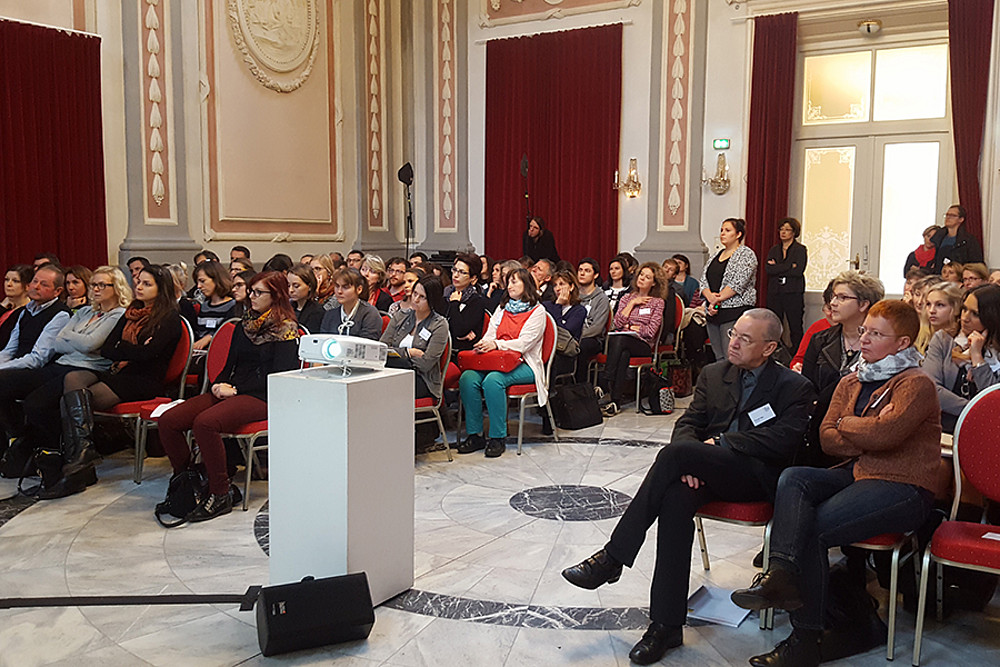
Großes Interesse: 120 BesucherInnen kamen zur Tagung ins Meerscheinschlössl.

Großes Interesse: 120 BesucherInnen kamen zur Tagung ins Meerscheinschlössl.

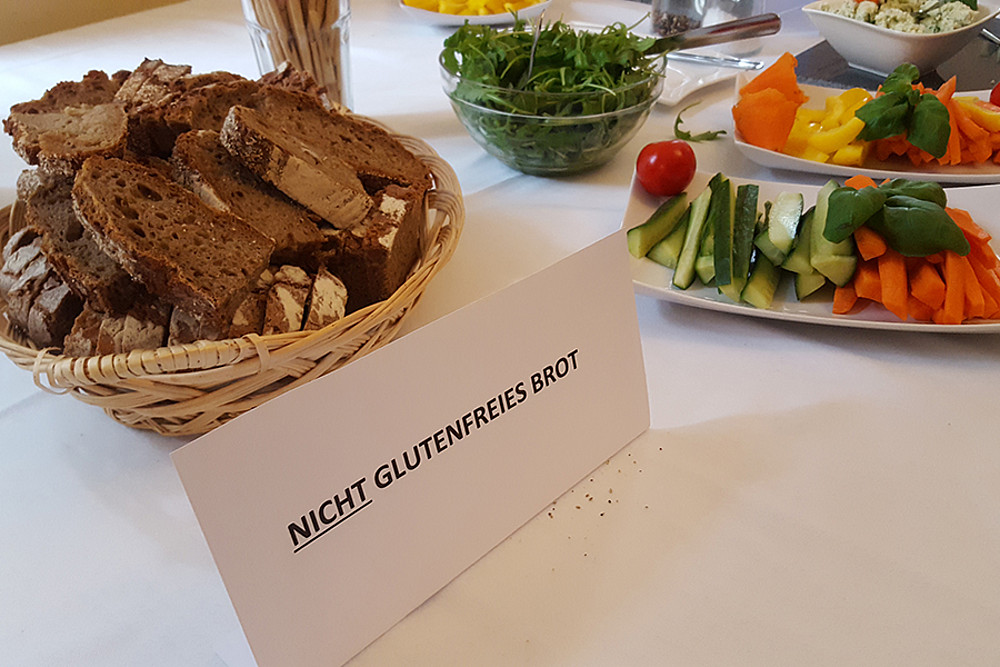
Kostproben gab's nicht nur aus der Wissesnchaft, sondern auch am Pausenbuffet.

Kostproben gab's nicht nur aus der Wissesnchaft, sondern auch am Pausenbuffet.

ForscherInnen servierten Wissenswertes zur Unverträglichkeit von Lebensmitteln leicht verständlich

Laktosefreie Milch, Brot ohne Gluten, Saucen ohne Glutamat: Die Supermarktregale sind voll mit Lebensmitteln, die auf KonsumentInnen mit Allergien und Unverträglichkeiten Rücksicht nehmen. „Wissenschaftliche Studien haben bestätigt, dass nur ein Prozent der Bevölkerung in der westlichen Welt an Zöliakie leidet und daher gänzlich auf Produkte mit Gluten verzichtet werden muss. Laut einer Umfrage in Österreich fühlen sich jedoch mehr als 15 Prozent unwohl, wenn sie Produkte mit Gluten konsumieren“, erläuterte Dr. Fritz Treiber vom Geschmackslabor der Uni Graz. Gründe genug, die wissenschaftlichen Hintergründe zu beleuchten: fundiert, leicht verständlich und aus verschiedenen Blickwinkeln. So geschehen im Rahmen der Tagung „Nahrungsmittelunverträglichkeit – Was Sie schon immer darüber wissen wollten“ am 26. November 2016 im Meerscheinschlössl der Karl-Franzens-Universität.
120 BesucherInnen informierten sich über den aktuellen Stand der Forschung. ExpertInnen klärten über die Hintergründe auf, das Publikum beteiligte sich rege an den anschließenden Diskussionen.

Prof. Dr. Thomas Vilgis vom Max-Planck Institut in Mainz berichtete, dass Glutamat zwar den Geschmack verstärkt aber auf keinen Fall die Ursache für das „China Restaurant Syndrom“ ist.
Prof. Barbara Bohle von der MedUni Wien erklärte, wie es zu einer Kreuzallergie in Bezug auf Nahrungsmitteln kommen kann und wie sich diese ausprägt.
Univ.-Prof. Dr. Andrea Grisold von der Med Uni Graz veranschaulichte die häufigsten Ursachen für Lebensmittelinfektionen: „Nicht jedes Bauchweh muss gleich eine Unverträglichkeit sein.“
Assoz. Prof. Dr. Sandra Holasek von der Med Uni Graz zeigte die Unterschiede zwischen Zöliakie und Weizensensitivität auf. Auch glutenfreie Alternativen in Bezug auf Brot und Gebäck wurden besprochen.
Prof. Frank Wuketits, Evolutionsbiologe und Philosoph von der Uni Wien, regte die TeilnehmerInnen mit seinem Vortrag „Werden wir unserer Natur noch gerecht – ein Plädoyer für artgerechte Menschenhaltung“ zum Nachdenken an.

Das Geschmackslabor ist Teil der 7. fakultät, des Zentrums frü Gesellschaft, Wissen und Kommunikation der Uni Graz. >> Mehr Info

created by Andreas Schweiger

Related news

Full effort in the heat: the Sports Centre was in full swing at the Kleeblattlauf

On 19 June 2026, 2,000 runners and hundreds of supporters made their way to the Rosenhain for a sporting end-of-term event.

Save, invest or guarantee: What Austrians expect from the state

Austria needs to make savings. But where? And what should the Republic actually be spending its money on? The answers are provided by the initial findings of a major study involving the University of Graz. 99 per cent of those surveyed are in favour of the state ensuring healthcare provision. Almost three-quarters would like to see more public funding for education, whilst only around three per cent are in favour of cuts in this sector.

Science meets blockbuster: Campus cinema at the University of Graz

A cinematic treat for the scientific community: the courtyard of the University of Graz’s main building is once again being transformed into an atmospheric open-air cinema this year. From 29 June to 10 July 2026 (Mondays to Fridays from 8.30 pm), blockbusters and documentaries will be shown on the open-air screen. Academics from the University of Graz will be taking a closer look at the films shown, examining them to distinguish fact from fiction.

Complying with the norm: Why Do Standards Shape Our Lives, Elisabeth Staudegger?

Standards determine whether a sheet of paper fits in a printer or whether a charging plug can power multiple devices. These standards shape our everyday lives. But who actually sets these standards? Where are the weaknesses, and how could science help to improve them? Elisabeth Staudegger, Head of the ‘Law and IT’ Department at the Institute for Legal Foundations at the University of Graz, host the Academic Standards Day on 16 June. Here she relays how sciences can contribute to the topic of standardisation and reveals her personal favourite standard.

Begin of page section:
Additional information:

University of Graz
Universitaetsplatz 3
8010 Graz
Austria
  • Contact
  • Web Editors
  • Moodle
  • UNIGRAZonline
  • Imprint
  • Data Protection Declaration
  • Accessibility Declaration
Weatherstation
Uni Graz

End of this page section. Go to overview of page sections

End of this page section. Go to overview of page sections

Begin of page section:

End of this page section. Go to overview of page sections