Begin of page section:
Page sections:

  • Go to contents (Accesskey 1)
  • Go to position marker (Accesskey 2)
  • Go to main navigation (Accesskey 3)
  • Go to sub navigation (Accesskey 4)
  • Go to additional information (Accesskey 5)
  • Go to page settings (user/language) (Accesskey 8)
  • Go to search (Accesskey 9)

End of this page section. Go to overview of page sections

Begin of page section:
Page settings:

English en
Deutsch de
Search
Login

End of this page section. Go to overview of page sections

Begin of page section:
Search:

Search for details about Uni Graz
Close

End of this page section. Go to overview of page sections


Search

Begin of page section:
Main navigation:

Page navigation:

  • University

    University
    • About the University
    • Organisation
    • Faculties
    • Library
    • Working at University of Graz
    • Campus
    Developing solutions for the world of tomorrow - that is our mission. Our students and our researchers take on the great challenges of society and carry the knowledge out.
  • Research Profile

    Research Profile
    • Our Expertise
    • Research Questions
    • Research Portal
    • Promoting Research
    • Research Transfer
    • Ethics in Research
    • Commission for Scientific Integrity
    Scientific excellence and the courage to break new ground. Research at the University of Graz creates the foundations for making the future worth living.
  • Studies

    Studies
    • Prospective Students
    • Students
  • Community

    Community
    • International
    • Location
    • Research and Business
    • Alumni
    The University of Graz is a hub for international research and brings together scientists and business experts. Moreover, it fosters the exchange and cooperation in study and teaching.
  • Spotlight
Topics
  • Sustainable University
  • Researchers answer
  • Work for us
Close menu

End of this page section. Go to overview of page sections

Begin of page section:
You are here:

University of Graz News Alles unter Kontrolle

End of this page section. Go to overview of page sections

Wednesday, 21 March 2018

Alles unter Kontrolle

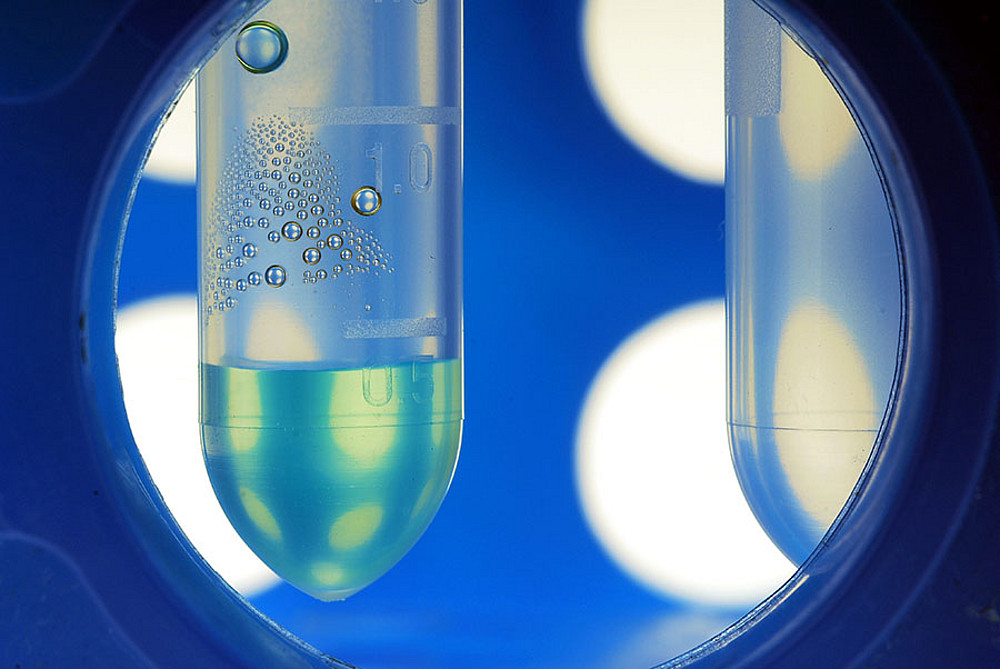
Grazer ForscherInnen nutzen durch Licht steuerbare künstliche Fettmoleküle zur Kontrolle von Zell- und Organfunktionen. Foto: Uni Graz/cp-pictures

Grazer ForscherInnen nutzen durch Licht steuerbare künstliche Fettmoleküle zur Kontrolle von Zell- und Organfunktionen. Foto: Uni Graz/cp-pictures

Grazer WissenschafterInnen entwickeln neue Methode zur Steuerung von Zell- und Organfunktionen mittels Licht

Die Photopharmakologie nutzt durch Licht schaltbare Moleküle, sogenannte molekulare Lichtsensoren, um die präzise Kontrolle über biologische bzw. pharmakologische Wirkungen zu erlangen. Im Forschungsverbund BioTechMed-Graz haben nun ForscherInnen der Medizinischen Universität gemeinsam mit KollegInnen der Karl-Franzens-Universität und in enger Vernetzung mit Arbeitsgruppen an der Johannes Kepler Universität Linz sowie der Medizinischen Universität Wien ein völlig neuartiges Prinzip entwickelt, das künstliche Fettmoleküle zur Kontrolle von Zell- und Organfunktionen einsetzt. Darin sehen die WissenschafterInnen einen wichtigen Ansatz zur Entwicklung neuer Therapiekonzepte. Die Forschungsergebnisse wurden aktuell im Journal Nature Chemical Biology veröffentlicht.

Methoden zur Kontrolle und Steuerung von Zell- und Gewebefunktionen durch Licht haben in den letzten Jahren große Aufmerksamkeit erregt und werden stetig weiterentwickelt. Die Möglichkeit des zeitlich und räumlich hochpräzisen Eingriffs in den Zellstoffwechsel wird zum Beispiel für den effizienten und berührungsfreien Eingriff in Gehirn- und Herzfunktionen aber auch zur lokalen Steuerung von Immunzellen und damit zur Tumorbehandlung adaptiert. „Insbesondere die Photopharmakologie, also der Einsatz von lichtkontrollierten Pharmaka, und die Optochemogenetik, bei der in bestimmten Körperzellen spezifische Sensitivität für photopharmakologische Intervention erzeugt wird, etablieren sich derzeit als neue biomedizinische Technologien“, erklärt Univ.-Prof. Dr. Klaus Groschner von der Med Uni Graz. Diesen Ansatz verfolgt Groschners Team gemeinsam mit PD Dr. Toma Glasnov von Institut für Chemie der Karl-Franzens-Universität im Forschungsverbund BioTechMed-Graz.

Grazer Entwicklung
In den letzten fünf Jahren haben die Grazer WissenschafterInnen ein ganz neues photopharmakologisches und optochemogenetisches Prinzip entwickelt, das innerhalb der Forschungscommunity auf großes Interesse stößt und nun im renommierten Journal Nature Chemical Biology vorgestellt wurde. „Wir nutzen künstliche, durch Licht steuerbare Fettmoleküle – sogenannte optisch schaltbare Lipide bzw. Photolipide – um Zell- und Organfunktionen gezielt kontrollieren zu können“, beschreibt Groschner das Verfahren. In der aktuellen wissenschaftlichen Arbeit wurden spezielle Lipidrezeptoren, Moleküle der TRP-Ionenkanalfamilie, detailliert untersucht. „TRP-Kanäle bestehen aus verschiedenen Proteinen und spielen beim Menschen vor allem in der Geschmackswahrnehmung sowie dem Temperatur- und Schmerzempfinden eine große Rolle“, erklärt der Wissenschafter.

Mit Hilfe neu entwickelter Photolipide konnten die Grazer ForscherInnen den Mechanismus der Lipidsensitivität dieser TRP-Kanäle aufklären und aus diesem Wissen die Rezeptoren als Zielstrukturen für optische Interventionen – also durch Licht gesteuerte Eingriffe – etablieren. Die lipidempfindlichen TRP-Moleküle werden sowohl im Gehirn als auch im Herz-Kreislauf- und Immunsystem exprimiert und können durch gezielte genetische Veränderungen zu einem höchstempfindlichen (Super)Rezeptor für künstliche Photolipide modifiziert werden, ohne dabei die Reaktion auf den normalen (physiologischen) Fettstoffwechsel wesentlich zu verändern. Damit scheint eine weitere Stufe der Präzision und Spezifität der Zellsteuerung durch Licht erreicht.
Diese Technologie soll nun zur Entwicklung neuer Therapiekonzepte sowie hocheffizienter optischer Screening-Verfahren in der Arzneimittelentwicklung zum Einsatz kommen.

Publikation
An optically controlled probe identifies lipid-gating fenestrations within the TRPC3 channel
Michaela Lichtenegger, Oleksandra Tiapko, Barbora Svobodova, Thomas Stockner, Toma N. Glasnov, Wolfgang Schreibmayer, Dieter Platzer, Gema Guedes de la Cruz, Sarah Krenn, Romana Schober, Niroj Shrestha, Rainer Schindl, Christoph Romanin & Klaus Groschner
Nature Chemical Biology (2018), doi:10.1038/s41589-018-0015-6


created by Gerald Auer & Gudrun Pichler

Related news

Career Booster: How the Research Careers Campus supports researchers

They are innovative, creative and productive – researchers who have not yet been appointed to a professorship make a massive contribution to a university’s research output. To provide them with even better support on their career path, the University of Graz has established the Research Careers Campus. The official launch took place on 22 April 2026 with a ‘festival’.

Greenery on the rise: over 500 new flowers, perennials and shrubs on campus

Bright blooms and fresh greenery make our hearts beat faster in spring. But it is not just us humans who delight in this colourful growth. For many animals, this splendour provides, above all, food and habitat. There has recently been an increase in this on the University of Graz campus. More than 500 native flowers, perennials and shrubs have been planted on strips of fallow land around Universitätsplatz 2.

Building biological bridges: Chemist discovers an ecological tool for the pharmaceutical industry

Building a relationship on a solid foundation is also important in chemistry. To produce medicines, disinfectants or plant protection products, stable bonds between carbon atoms must be formed. Conventional chemical methods rely on environmentally harmful reagents and solvents to carry out the desired reaction. This process also produces unusable by-products. Chemist Lilla Gal has discovered an enzyme that enables the same process to take place efficiently and sustainably. The results of her research were recently published in the prestigious journal Angewandte Chemie.

Higher Education Strategy 2040: Austria’s universities on course for the future

Austria has 77 higher education institutions, which is above the EU average – but does this really make sense? The new Higher Education Strategy 2040 focuses on cooperation rather than mergers. As one of the six largest universities in Austria, the University of Graz plays a central role in this.

Begin of page section:
Additional information:

University of Graz
Universitaetsplatz 3
8010 Graz
Austria
  • Contact
  • Web Editors
  • Moodle
  • UNIGRAZonline
  • Imprint
  • Data Protection Declaration
  • Accessibility Declaration
Weatherstation
Uni Graz

End of this page section. Go to overview of page sections

End of this page section. Go to overview of page sections

Begin of page section:

End of this page section. Go to overview of page sections