- Monday, 1. June 2026
- Tuesday, 2. June 2026
- Wednesday, 3. June 2026
- Thursday, 4. June 2026
- Friday, 5. June 2026
- Saturday, 6. June 2026
- Sunday, 7. June 2026
- Monday, 8. June 2026
- Tuesday, 9. June 2026
- Wednesday, 10. June 2026
- Thursday, 11. June 2026
- Friday, 12. June 2026
- Saturday, 13. June 2026
- Sunday, 14. June 2026
- Monday, 15. June 2026
- Tuesday, 16. June 2026
- Wednesday, 17. June 2026
- Thursday, 18. June 2026
- Friday, 19. June 2026
- Saturday, 20. June 2026
- Sunday, 21. June 2026
- Monday, 22. June 2026
- Tuesday, 23. June 2026
- Wednesday, 24. June 2026
- Thursday, 25. June 2026
- Friday, 26. June 2026
- Saturday, 27. June 2026
- Sunday, 28. June 2026
- Monday, 29. June 2026
- Tuesday, 30. June 2026
| Mo Monday | Tu Tuesday | We Wednesday | Th Thursday | Fr Friday | Sa Saturday | Su Sunday |
|---|---|---|---|---|---|---|
| 1 Monday, 1. June 2026 | 2 Tuesday, 2. June 2026 | 3 Wednesday, 3. June 2026 | 4 Thursday, 4. June 2026 | 5 Friday, 5. June 2026 | 6 Saturday, 6. June 2026 | 7 Sunday, 7. June 2026 |
| 8 Monday, 8. June 2026 | 9 Tuesday, 9. June 2026 | 10 Wednesday, 10. June 2026 | 11 Thursday, 11. June 2026 | 12 Friday, 12. June 2026 | 13 Saturday, 13. June 2026 | 14 Sunday, 14. June 2026 |
| 15 Monday, 15. June 2026 | 16 Tuesday, 16. June 2026 | 17 Wednesday, 17. June 2026 | 18 Thursday, 18. June 2026 | 19 Friday, 19. June 2026 | 20 Saturday, 20. June 2026 | 21 Sunday, 21. June 2026 |
| 22 Monday, 22. June 2026 | 23 Tuesday, 23. June 2026 | 24 Wednesday, 24. June 2026 | 25 Thursday, 25. June 2026 | 26 Friday, 26. June 2026 | 27 Saturday, 27. June 2026 | 28 Sunday, 28. June 2026 |
| 29 Monday, 29. June 2026 | 30 Tuesday, 30. June 2026 |
1
Wednesday, 1. July 2026
|
2
Thursday, 2. July 2026
|
3
Friday, 3. July 2026
|
4
Saturday, 4. July 2026
|
5
Sunday, 5. July 2026
|
Spatial ecology of microbes - the role of spatial structure in microbial interactions
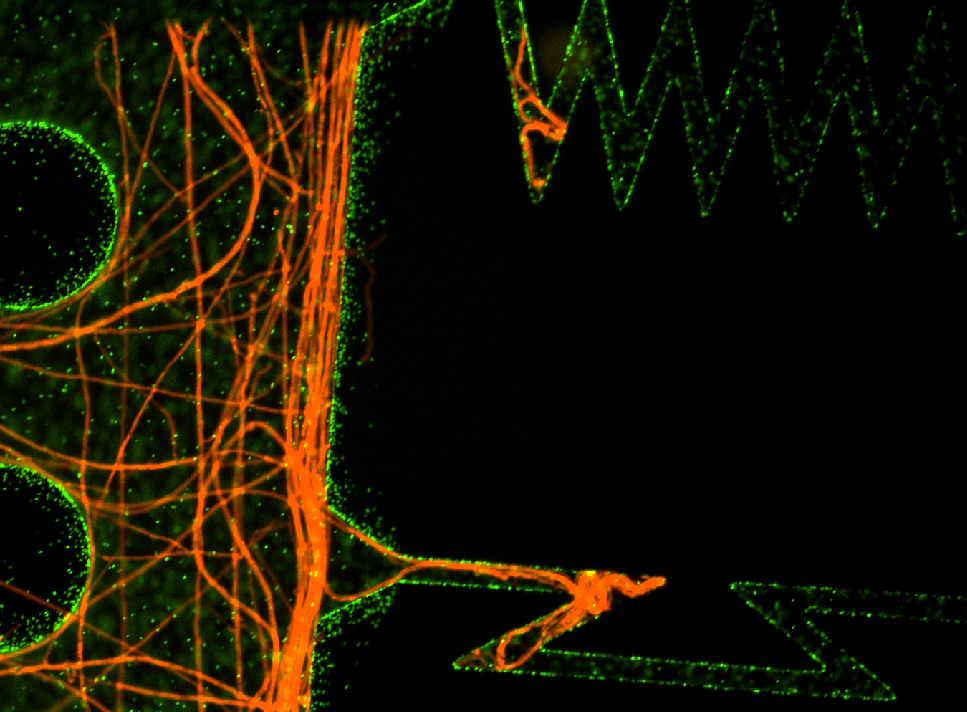
Carlos Arellano (Univ. Wien): Microbial diversity is essential for the functioning of microbial ecosystems. Losing such di-versity leads to dramatic imbalances and eventual loss of microbiomes, resulting, for exam-ple, in desertification, reduction of carbon stocks, and loss of aboveground ecosystems, in soils, to health complications, such as inflammatory diseases, obesity, and neurological dis-orders, in the human gut. Yet, when assayed in the lab, most of the microbes present in mi-crobiomes cannot coexist and diversity and functions are quickly lost. Considering the im-mense importance of microbial diversity in maintaining microbiome functions, we know re-markably little about how it is maintained in nature. Spatial structure of microbiomes has been proposed as a mediator of these interactions, permitting the coexistence of mutually exclusive microbes. Yet, this hypothesis has not been systematically tested because micro-biome processes occur at small spatial and temporal scales and are obscured by microbi-omes’ own intricated matrices. In my lab, we use a novel combination of a microfluidic meth-odological framework together with mathematical modeling to resolve the fundamental ques-tion of how microhabitat spatial structure mediates microbial interactions and drives diversity in microbiomes. Such empirical and modelling approach provides an integrated view to un-derstand the fundamental way spatial structure drives microbial diversity in microbiomes. Our aim with this cross-disciplinary set of techniques is to generate essential insights to preserve and recover microbiome diversity across all types of environments, from soils to the human gut.