Keiichi Kubo: Why was Milosevic betrayed?
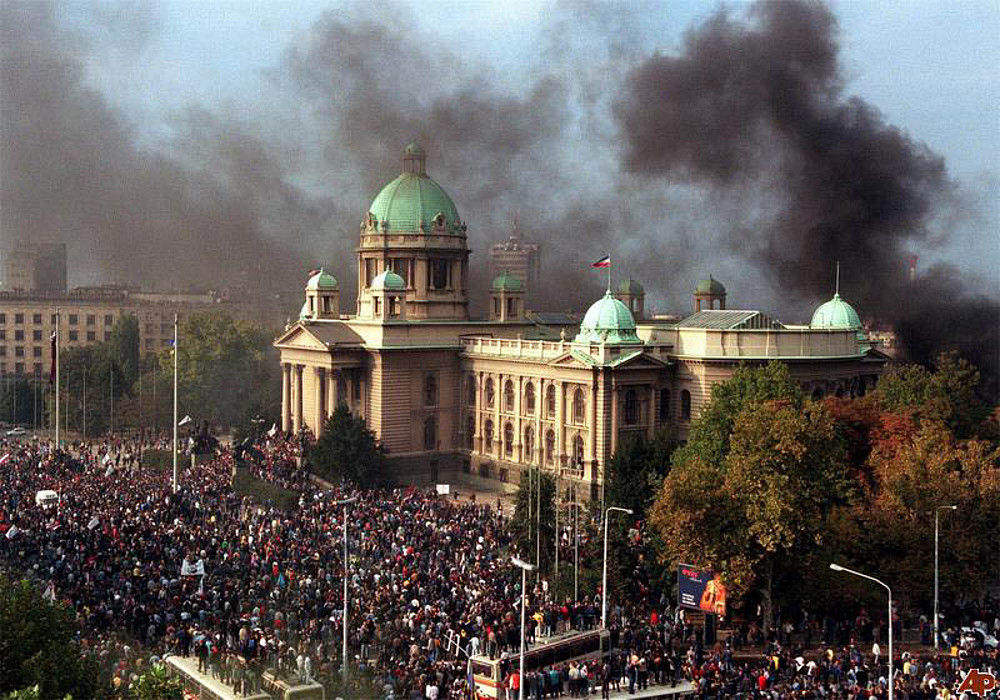
In the Bulldozer Revolution in Serbia, one of the critical moments was when it became clear that the notorious security forces – called “Red Berets” – decided to take sides with the people rather than the dictator and not to use force against the demonstrators. The military forces also did not use force against the demonstrators, despite the desire of Slobodan Milošević to do so. This defection of the military and security forces in the revolutionary situation is interesting, as the similar phenomena are observed elsewhere, such as in the Middle East during the “Arab spring”. Why, or under what conditions, do the military and security forces defect from the dictatorial regime and take sides with the people who are calling for the democratization? This presentation attempts to present the theoretical framework based on the existing literature as well as the empirical analysis of the case of Serbia.
Keiichi Kubo is Associate Professor at the Faculty of Political Science and Economics, Waseda University, Japan. He holds his Ph.D. from the London School of Economics and Political Science, where he specialized in comparative politics. His research interests include democratization, political parties and party system, quality of democracy, civil war and post-conflict peacebuilding, and ethnic identity, with the regional focus on the former Yugoslav region. His recent publications include "Host State Responses to Ethnic Rebellion:
Serbia and Macedonia in Comparison," in Jean-Pierre Cabestan & Aleksandar Pavković, eds., Secessionism and Separatism in Europe and Asia: To Have a State of One's Own (London: Routledge, 2013), pp. 82-98.