Cacophonic Tango
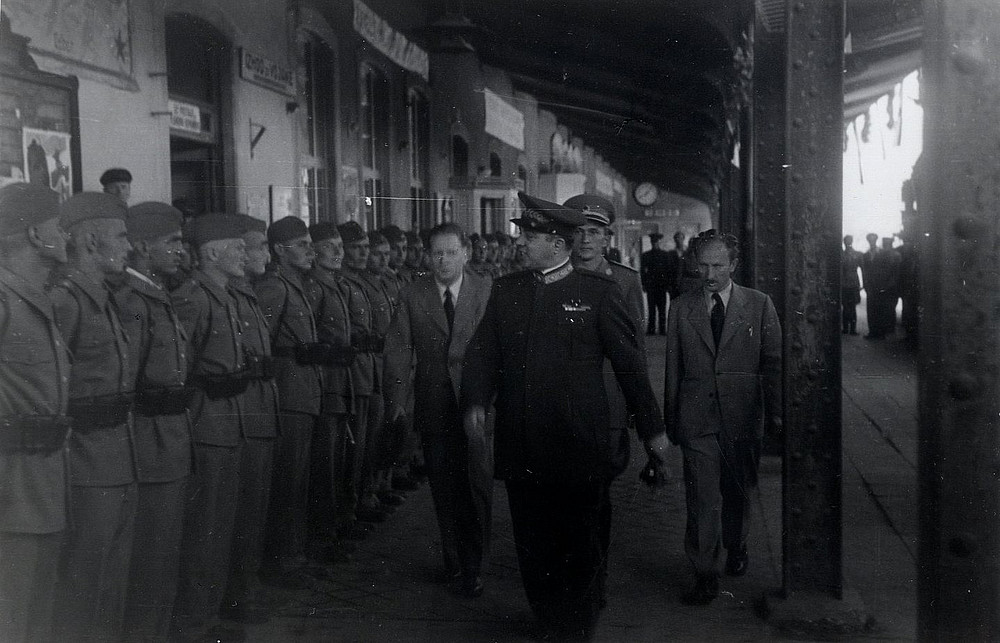
A story of a great if not cordial friendship between two neighboring countries with similar political system ended after only few years in a great row that lasted, with some ups and downs, for more than 40 years. Throughout the existence of the second Yugoslav state the Yugoslav-Albanian relations represented an important aspect of the Yugoslav foreign policy, which, however, only expressed itself during the critical moments of the relations between these states. The whole range of these relations was based on mutual distrust, caused by the negative historical experience and the Yugoslav interference with the Albanian internal political struggles in the time of partnership, causing the resistance of a major part of the Albanian leadership, which strived to preserve the Albanian political and economic independence. We can basically state that hardline attitude of the Albanian leadership, which turned Albania into the most isolated European state with minimal contacts with the outside world at the end of the 1970s, was partly caused by the Yugoslav policy during and after World War II. The Yugoslav policy towards Albania after the breakup on the other hand quickly became and remained consistent in its basic sentiment: appeasement, which ensured a certain level of internal stability and safe borders. However, we could hardly speak of any detailed foreign political plans of the Yugoslav state: it usually only tried to adapt, in the least offensive manner possible, to the frequent moody changes of the Albanian regime.
Dr. Jurij Hadalin is an assistant at the Institute of Contemporary History in Ljubljana. His principle areas of research are foreign and internal politics of the second Yugoslav state, on which he published several works. He obtained his PhD on Yugoslav-Albanian relations in 2010 at the Ljubljana University and later published it in a monograph Boj za Albanijo: propad jugoslovanske širitve na Balkan (Struggle for Albania: the Demise of the Yugoslav Expansionist Policy in the Balkans), Ljubljana, 2010. He became engaged more recently in the field of Digital Humanities as one of the coordinators of History of Slovenia – SIstory portal (www.sistory.si), coordinator of the national DH initiative SI-DIH portal (www.sidih.si) and national coordinator for DARIAH-ERIC European digital infrastructure (www.dariah.eu).